
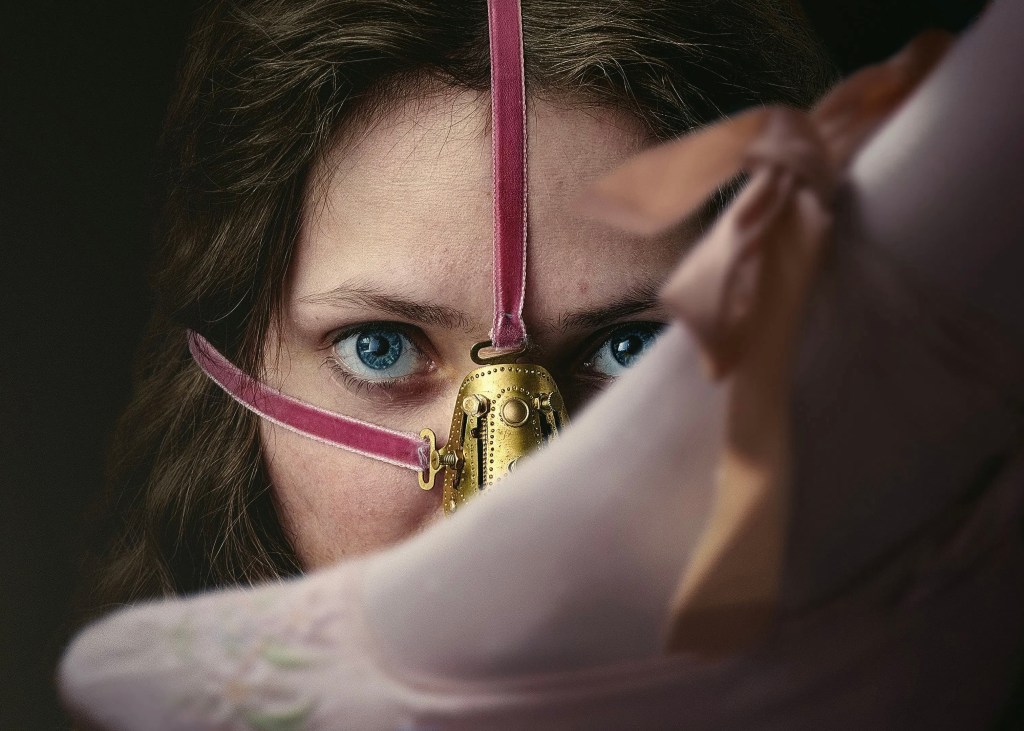
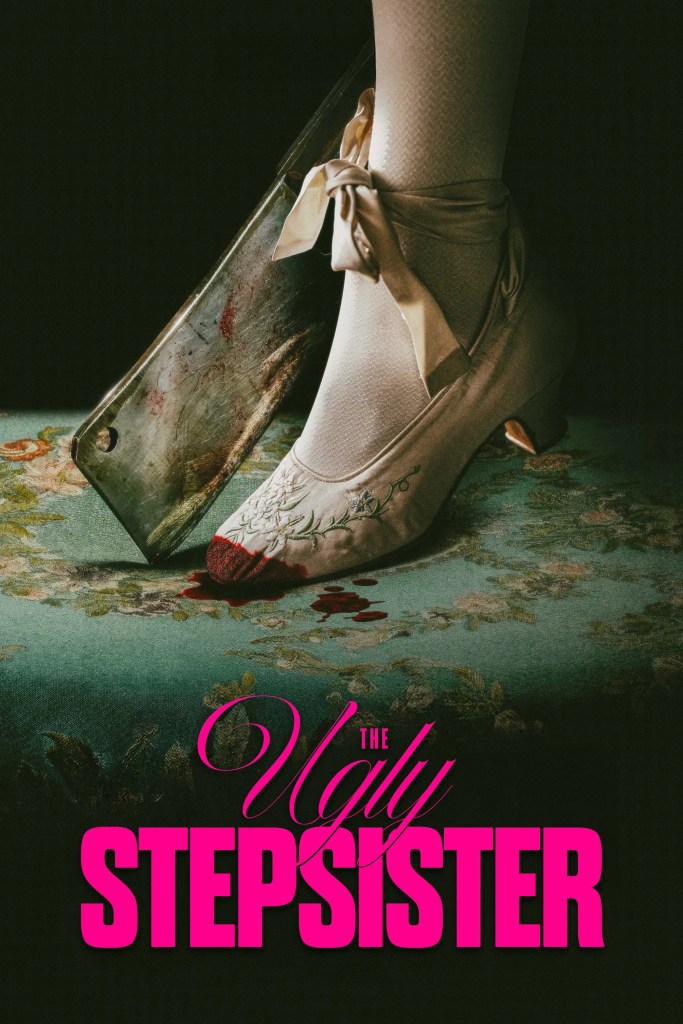
Let’s get one thing straight: I’m sick to death of fairy tale retellings that sand down the jagged edges of their source material to churn out sanitized slop for the Disney+ crowd. So when I stumbled into The Ugly Stepsister, directed by Norwegian newcomer Emilie Blichfeldt, I braced for another tepid rehash. Instead, I got a body horror masterpiece that rips the Cinderella myth apart like a rabid wolverine, leaving blood, guts, and a wicked grin in its wake. Fuck beauty standards, patriarchal nonsense, and the saccharine lies we’ve been fed about “happily ever after.” Blichfeldt’s debut is a grotesque, hilarious, and oddly poignant beast that demands your attention, even if it makes you gag.
Emilie Blichfeldt, hailing from a tiny village above the Arctic Circle, is no stranger to isolation or the raw, untamed weirdness of the human psyche. Growing up with books and a late-arriving VHS player, she devoured films like Amélie and Lars von Trier’s Dogville, the latter sparking her cinematic obsession. Her 2018 short, Sara’s Intimate Confession, played at Locarno and hinted at her knack for blending visceral discomfort with sharp social commentary. That short, a claustrophobic dive into body image and shame, was a clear precursor to The Ugly Stepsister. Blichfeldt’s influences (Eastern European fairy-tale cinema from the ‘60s and ‘70s, the grim tactility of the Brothers Grimm, and von Trier’s unapologetic provocation) pulse through her feature debut. This Norwegian-Polish-Swedish-Danish co-production proves she’s not just a promising talent; she’s a goddamn force.
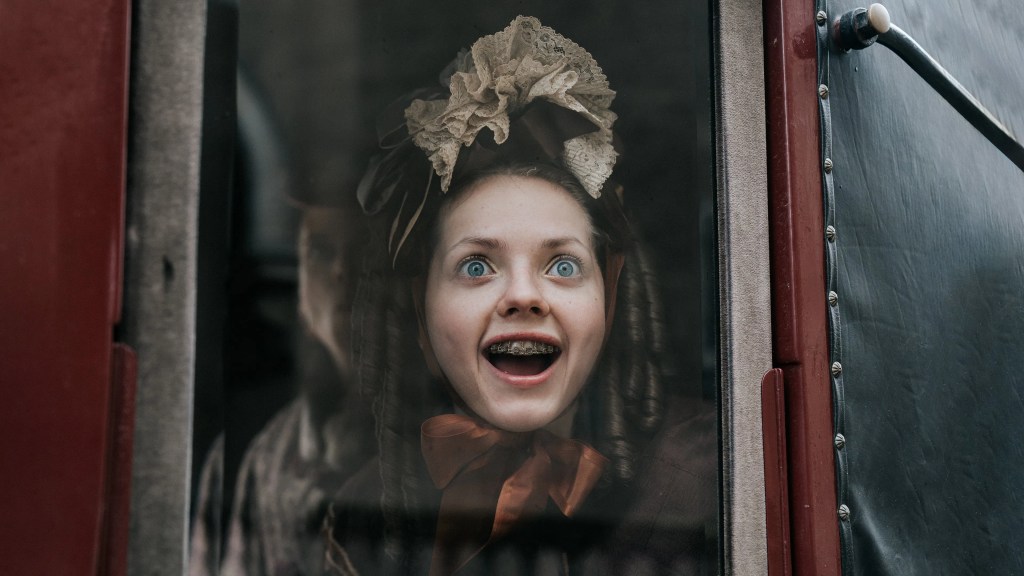
Set in the fictional kingdom of Swedlandia, The Ugly Stepsister follows Elvira (Lea Myren), a gawky, braces-wearing teen who’s hopelessly smitten with Prince Julian (Isac Calmroth) after reading his drippy poetry. Her mother, Rebekka (Ane Dahl Torp), a cynical gold-digger, marries a wealthy nobleman, only to discover he’s penniless and dead by wedding night, leaving her with a stunning stepdaughter, Agnes (Thea Sofie Loch Næss). As the prince announces a ball to find his bride, Elvira, egged on by Rebekka, embarks on a gruesome quest to outshine Agnes, the Cinderella-esque beauty. What follows is a descent into body horror madness: Elvira undergoes grotesque, medieval “beautification” procedures. The film twists the fairy tale into a dark satire of beauty obsession, with Elvira’s transformation both tragic and absurdly funny.

Blichfeldt’s central thesis is that beauty standards are a patriarchal trap, pitting women against each other in a zero-sum game for male validation. Elvira’s mutilations, each more stomach-churning than the last, symbolize the literal and figurative carving up of women to fit impossible ideals. The tapeworm, a squirming metaphor for self-destruction, underscores how internalized misogyny eats you alive. Agnes, the “perfect” stepsister, isn’t vilified but shown as equally ensnared, her “natural” beauty a different kind of prison. The prince’s poetry, initially Elvira’s beacon, reveals him as a shallow cad, exposing romance as a hollow lure. Blichfeldt draws heavily from the Brothers Grimm’s Aschenputtel, but she amplifies the gore to critique modern beauty culture with medieval flair. The film’s anachronisms (braces in the 18th century!) cleverly bridge past and present, reminding us that this madness is timeless.
The symbolism is bold but not overbearing. The decaying wedding feast in the opening credits, crawling with maggots, sets the tone: beauty is a rotting facade. Elvira’s braces, a clunky emblem of her “flaws,” contrast with Agnes’s effortless grace, while Rebekka’s widow’s weeds (gorgeous yet sinister) reflect her predatory pragmatism. The prince’s slipper, a fetishized object in the original tale, becomes a grotesque goalpost. Blichfeldt’s feminist lens, inspired by Angela Carter’s post-feminist fairy tales, ensures no character is reduced to caricature. Even Rebekka, the villainous stepmother, is a tragic figure, driven by survival in a world that values women only as ornaments.

Blichfeldt’s screenplay is a tightrope walk between horror, satire, and tragedy. The dialogue crackles with dark humor—Rebekka’s line, “Keep your paws up, girl, or you’ll look like a sow,” is both cruel and absurdly funny. Elvira’s daydreams, narrated in breathy, poetic voiceovers, clash hilariously with the gritty reality of her “treatments.” The script avoids preaching, letting the visuals and character arcs carry the message.
Some secondary characters, like Alma (Flo Fagerli), Elvira’s rebellious sister, feel underdeveloped, but the focus on Elvira’s psychological unraveling is relentless and gripping. The pacing, clocking in at 1 hour 50 minutes, occasionally drags in the second act, but the third act’s unhinged climax redeems any lulls. Comparisons to The Substance are inevitable, but The Ugly Stepsister is less spiral-into-chaos and more a slow, deliberate dissection of despair.

- Originality: Blichfeldt disembowls Cinderella, stitching it back together with barbed wire. This isn’t a Maleficent-style villain redemption but a raw, unflinching look at a “villain’s” humanity. The Grimm-inspired gore feels fresh, not derivative, and the anachronistic touches keep it from being a stuffy period piece.
- Acting: Lea Myren is a revelation as Elvira, her micro-expressions conveying a heartbreaking shift from naive dreamer to broken zealot. Ane Dahl Torp’s Rebekka is a delicious mix of glamour and menace, while Thea Sofie Loch Næss makes Agnes complex, not a saint, but a flawed rival. Isac Calmroth’s Prince Julian is perfectly bland, a walking plot device who nails the role of “disappointing fantasy.”
- Direction: Blichfeldt’s confidence is staggering for a debut. She balances gore, humor, and pathos with a painter’s eye, never letting the horror overwhelm the humanity. Her use of close-ups—especially on Elvira’s anguished face—makes you feel complicit in her pain.
- Cinematography: Marcel Zyskind’s work is a gothic wet dream. The contrast between sunlit forests and shadowy manors evokes a fairy tale gone rancid. The fantasy sequences, with their oversaturated colors, are like fever dreams, while the gore shots (oh, that toe-chopping scene) are unflinchingly clear.
- Horror Impact: This isn’t jump-scare horror; it’s the kind that crawls under your skin and festers. The body horror is visceral with practical effects (kudos to VFX makeup artist Thomas Foldberg) that make every squelch and snap unbearable. The tapeworm scene alone is a masterclass in nauseating dread.
- Thematic Ambition: Blichfeldt indicts the systems—patriarchy, capitalism, family—that enforce beauty standards them. The film’s empathy for all its women, even the “villains,” elevates it beyond mere satire.
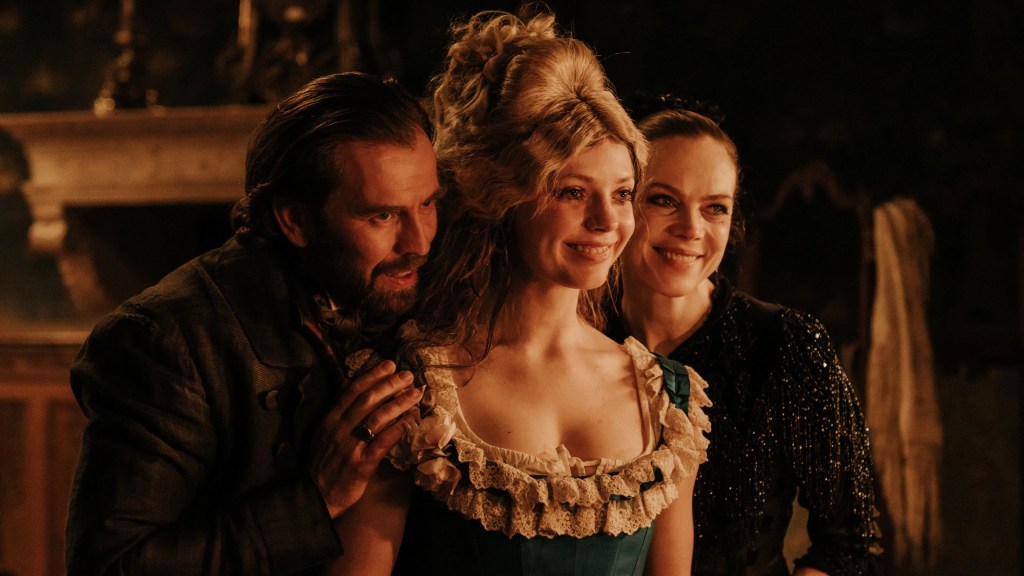
The soundtrack, by Vilde Tuv and Kaada, tries for an anachronistic electronic-classical vibe but feels repetitive, undermining key moments. Alma’s arc, hinted at as a counterpoint to Elvira’s obsession, needs more meat—her rebellion feels like a teaser for a different movie. These are minor quibbles in a film that’s otherwise a triumph.
The Ugly Stepsister is a near-masterpiece because it dares to be everything at once: horrifying, funny, tragic, and profound. Its originality lies in its refusal to coddle or moralize, trusting viewers to grapple with its messy truths. Myren’s performance and Blichfeldt’s direction are awards-worthy, and the cinematography and horror impact are unforgettable. The thematic ambition—dissecting beauty, power, and female rivalry—lands with precision, even if the execution stumbles slightly. This is a film that doesn’t just entertain; it claws at your soul and demands reflection.





TL;DR: The Ugly Stepsister is a gloriously unhinged body horror fairy tale that turns Cinderella into a blood-soaked satire of beauty standards. Emilie Blichfeldt’s debut is bold, brutal, and beautiful, with standout performances and visuals that’ll haunt you. Minor flaws don’t dull its razor-sharp edge.
Recommended for: Sickos who cackle at gore and cry at feminist rage, plus anyone who’s ever felt “not enough” in a world obsessed with perfection.
Not recommended for: Disney purists who think fairy tales should end with a tiara, or anyone who faints at the sight of a severed toe.
Our Rating
Director: Emilie Kristine Blichfeldt
Writer: Emilie Kristine Blichfeldt
Distributor: IFC Films
Released: April 18, 2025
 The Blog Without a Face
Leave a comment