

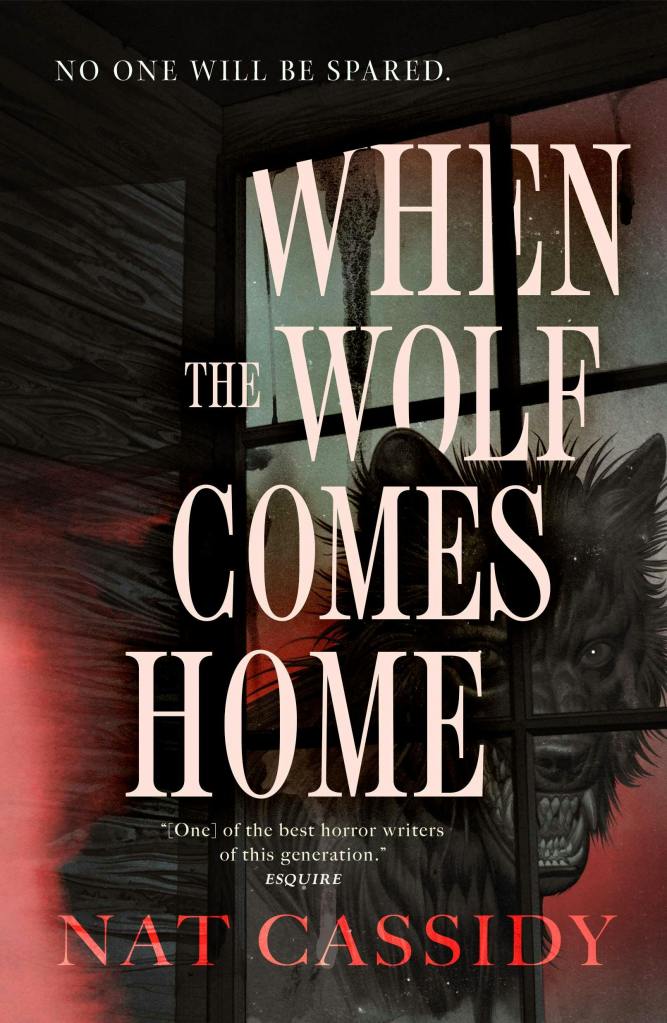
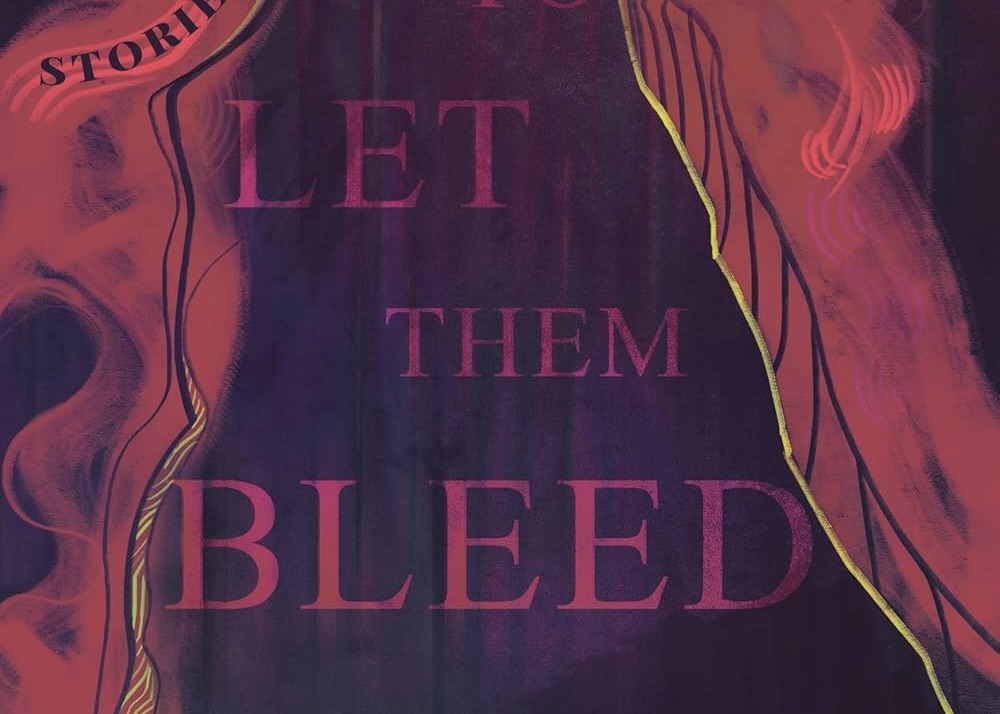
Nat Cassidy, the horror world’s resident shapeshifter, has been clawing his way into the genre’s spotlight with a gleeful disregard for convention. His debut, Mary: An Awakening of Terror (2022), was a ghost story that felt like it was written by a playwright who’d just snorted a line of Lovecraft’s nightmares. Nestlings (2023) took a stab at vampires, twisting the trope into a domestic horror kaleidoscope that made you rethink what fangs could mean. Now, with When The Wolf Comes Home, Cassidy doesn’t just tackle werewolves—he grabs the trope by the throat, rips it apart, and stitches it back together into something that’s equal parts Twilight Zone fever dream and Shakespearean tragedy. This guy’s performing literary alchemy, and I’m here for it, even if I’m a little pissed he’s making it look so easy.
Cassidy’s background as a playwright and actor (you’ve probably seen him as “Bad Guy #3” in some cop show) informs his work with a theatrical pulse. His novels hum with dialogue that snaps like a bear trap and scenes that unfold with the precision of a stage direction. He’s not afraid to lean into the absurd or the grotesque, but he’s got this infuriating knack for grounding it all in raw, human emotion. It’s like he’s daring you to laugh at the bloodbath while simultaneously breaking your heart. With When The Wolf Comes Home, he’s taken his signature blend of pulp horror, psychological depth, and bizarro fiction and cranked it to eleven. Let’s dive into the carnage.

Jess, a struggling actress in LA, is already having a garbage day when she accidentally stabs herself with a dirty needle while cleaning a diner bathroom. Limping home, she finds a five-year-old runaway, dubbed “Kiddo,” hiding in the bushes outside her apartment. Before she can process what’s happening, a violent encounter with the boy’s father—a hulking, desperate figure who’s more monster than man—forces Jess and Kiddo to flee. What follows is a breakneck chase across a surreal, blood-soaked landscape where Jess learns there’s something peculiar about the boy. The “werewolf” of the title isn’t your grandma’s full-moon howler; it’s a shapeshifting embodiment of paternal failure, chasing them with a hunger that’s as emotional as it is physical. As Jess grapples with her own grief over her deadbeat dad, the body count rises, and the line between reality and nightmare blurs into a crimson smear.
If horror is about confronting what scares us, When The Wolf Comes Home is a masterclass in making fear feel personal. The novel’s central theme is fatherhood—or, more accurately, the ways fathers fail. Jess’s estranged dad haunts her thoughts, a ghost of abandonment that mirrors Kiddo’s terror of his own father, a broken man turned monstrous. Cassidy doesn’t just slap a wolf pelt on this metaphor; he weaves it into every page, showing how fear of parental betrayal shapes us. The “wolf” is less a creature and more a symbol of the shapeshifting nature of love and neglect—sometimes protective, sometimes ravenous, always unpredictable.
Symbolism runs deep. Kiddo’s ability to turn fears into reality is a twisted riff on childhood imagination, where monsters under the bed become real because you believe in them. It’s also a nod to the power of storytelling, with Jess’s improv theater background framing her attempts to “yes, and” her way through the chaos. The novel’s four-part structure—“All Dads Are Motherfuckers,” “Yes And,” “Wolf at the Door,” and “Fairy-Tale Endings”—mirrors a play, each act shifting tone and stakes like a nightmare evolving in real time. Cassidy’s afterword, where he connects the story to his own fraught paternal relationship, adds a layer of vulnerability that makes the horror hit harder. This isn’t just a monster chase; it’s a reckoning with the legacies we inherit and the ones we leave behind.
The messaging is clear but never preachy: fear can destroy you, but it can also save you. Jess’s anxiety, a constant tormentor, becomes her fuel, pushing her to protect Kiddo even as it clouds her judgment. It’s a nuanced take on mental health that avoids the tired “trauma makes you stronger” cliché. Instead, Cassidy suggests that fear is a double-edged sword—necessary, messy, and deeply human.
Cassidy’s prose is a high-wire act, balancing snappy dialogue, visceral gore, and lyrical introspection without breaking a sweat. His theatrical roots shine in the pacing—each chapter feels like a scene, with beats that hit like a well-timed jump scare. The dialogue crackles with authenticity, especially Kiddo’s five-year-old voice, which is convincingly naive yet hauntingly wise. Cassidy’s humor is dark and playful, like when he describes a cartoonish monster as “if Bugs Bunny got a PhD in serial killing.” But he knows when to pull back, letting quiet moments—like Jess’s reflections on her father—land with devastating weight.
The prose isn’t perfect. Occasionally, Cassidy overexplains thematic connections, like he’s worried we won’t get it. A few metaphors feel like they’re trying too hard to be profound, and the mythology around Kiddo’s powers gets convoluted in the third act, threatening to tip into nonsense. But these are minor sins in a book that otherwise moves like a runaway train. It’s not a screenplay, but it could be, with its vivid set pieces and tight character arcs.

Strengths:
- “Cassidy’s imagination is a slaughterhouse of wonders, churning out horrors that are as inventive as they are unsettling.” The set pieces—evil cartoons, a literal Loch Ness Monster—are jaw-dropping in their creativity.
- The emotional core is unshakable. Jess and Kiddo’s bond is the heart of the story, making every horror hit harder because you care.
- The pacing is relentless, with a structure that keeps you guessing. It’s a 300-page book that feels like 600 in scope but reads like 200 in speed.
- Cassidy’s voice is singular, blending pulp horror with literary depth in a way that feels fresh in a genre often choked by formula.
Critiques:
- The middle section sags slightly, with road trip sequences that revisit the same emotional beats too often.
- Some secondary characters, like FBI agent Santos, feel like plot devices rather than people. His chapters are weirdly detached, like Cassidy wasn’t sure what to do with him.
- The mythology around Kiddo’s powers gets murky, with rules that shift just enough to confuse. It’s not a dealbreaker, but it’s a hiccup in an otherwise tight narrative.
- A few thematic connections are spelled out too explicitly, robbing them of subtlety. Trust your readers, Nat—we’re not idiots.
Subverting the werewolf trope while inventing new horrors is no small feat. It’s not wholly unique (shades of The Lathe of Heaven linger), but it’s damn close. It’s snappy, vivid, and emotionally resonant, with minor overexplanations as the only blemish. The gore is gruesome, the surreal scares are unforgettable, and the emotional stakes make it linger. Finally, Tackling fatherhood, fear, and imagination in a horror framework is bold and mostly successful. This is a book I’ll be shoving into people’s hands for years.




TL;DR: Nat Cassidy’s When The Wolf Comes Home is a bloody, heartfelt, batshit-insane horror novel that turns the werewolf trope into a meditation on bad dads and the fears that shape us. It’s a wild ride that’ll leave you howling for more.
Recommended for: Horror fans who love their scares with a side of existential dread and a sprinkle of dark humor.
Not recommended for: People who think horror should just be jump scares and no feelings, or those who faint at the sight of cartoon rabbits wielding machetes.
Tor Nightfire
Published April 22, 2025

 The Blog Without a Face
Leave a comment