
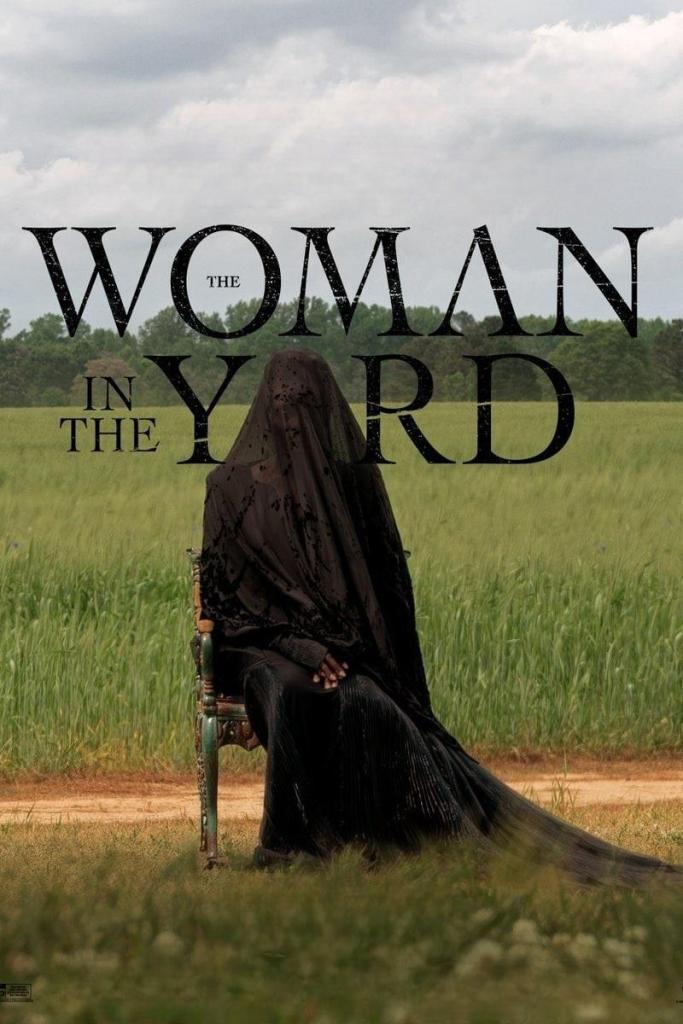
Oh, I didn’t see you there, you masochistic horror hounds. Well, while you’re here, let’s talk about The Woman in the Yard, a film that wants to punch you in the gut with existential dread but ends up tripping over its own goddamn crutches. Directed by Jaume Collet-Serra, a man who’s churned out everything from shark-bait thrillers like The Shallows to Dwayne Johnson’s superhero snoozefest Black Adam, this Blumhouse chiller tries to pivot from jump-scare schlock to a meditation on grief, guilt, and suicidal ideation. Ultimately, it’s a half-baked metaphor wrapped in a flimsy ghost story, and it collapses under the weight of its own ambitions faster than a drunk uncle at a wedding. Let’s tear this thing apart with the glee of a demon shredding a soul contract.
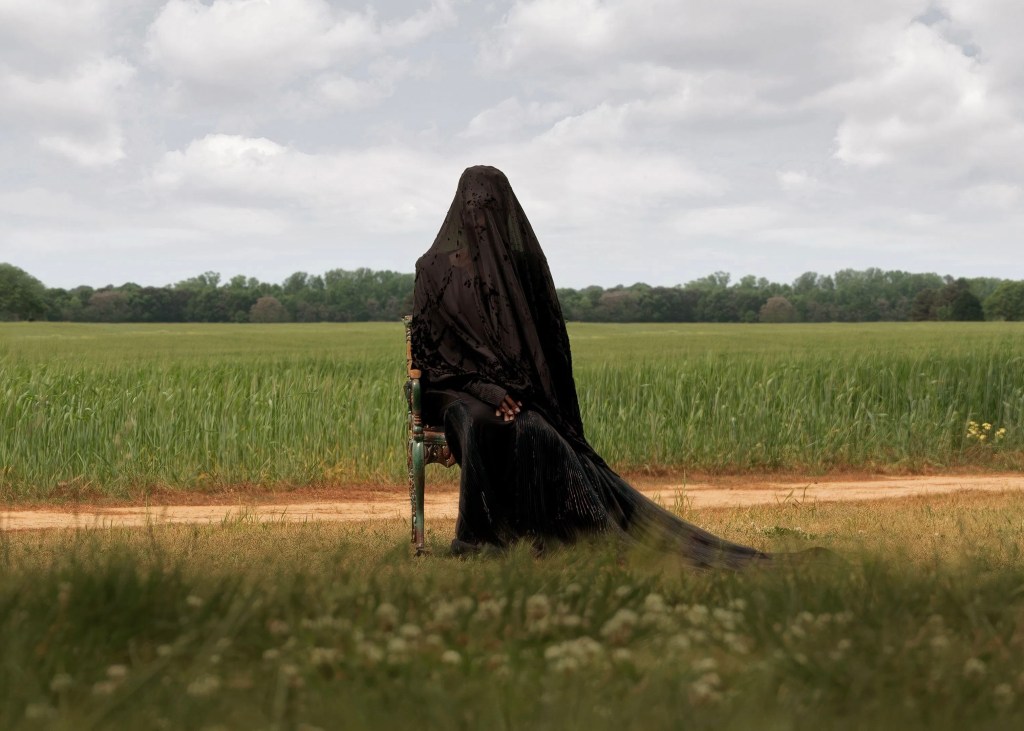
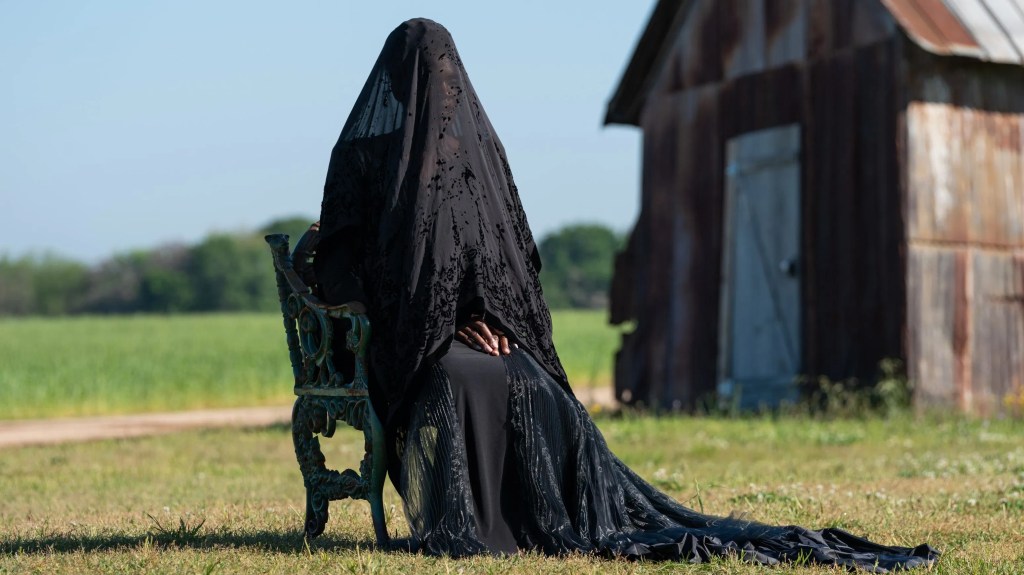
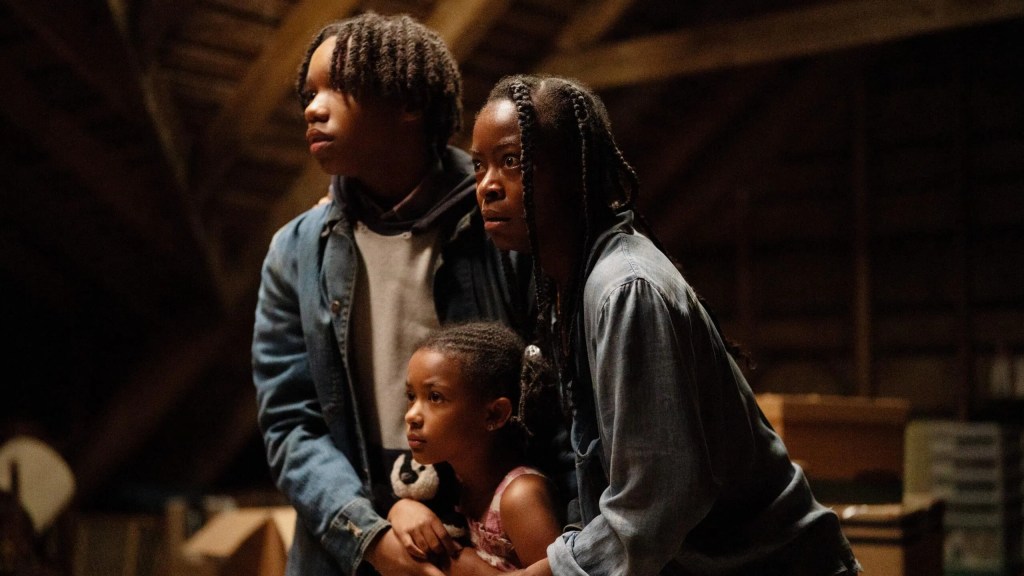
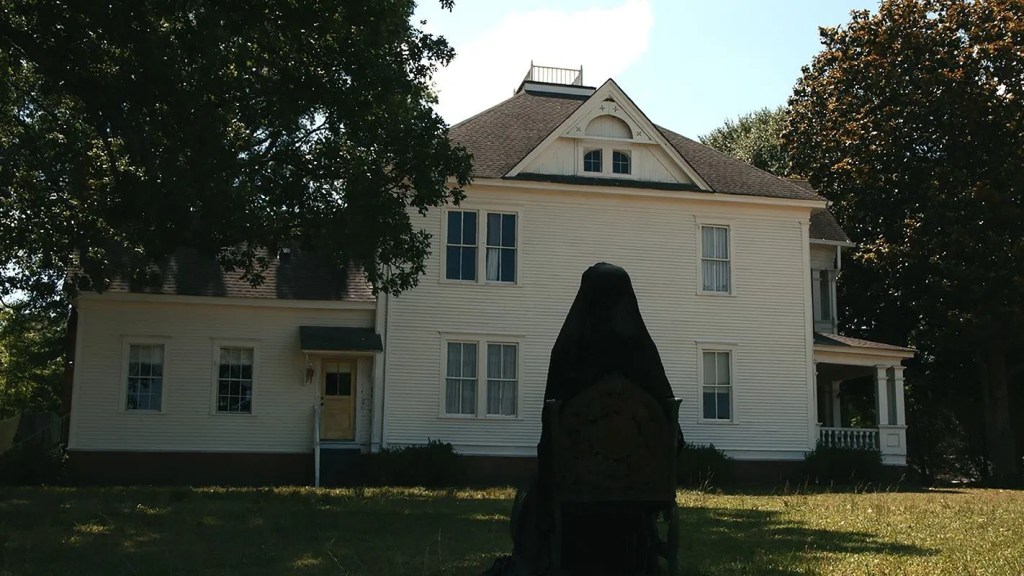
The plot is leaner than a vegan’s fridge. Ramona (Danielle Deadwyler), a widowed artist, is holed up in a dilapidated Georgia farmhouse with her teenage son Tay (Peyton Jackson) and young daughter Annie (Estella Kahiha). She’s grieving her husband David (Russell Hornsby), who died in a car crash that also left her leg in a brace and her psyche in tatters. The power’s out, the bills are unpaid, and the dog’s bowl is emptier than a politician’s promises. One morning, Tay spots a woman (Okwui Okpokwasili) in a black mourning veil sitting in a chair on the front lawn, staring at the house like she’s auditioning for a Gothic novel. Ramona, already teetering on the edge, confronts this cryptic figure, who mutters ominous shit like “Today’s the day” and flashes blood-streaked hands. What follows is a slow-burn descent into psychological horror—or at least, that’s what the film thinks it’s doing.
Collet-Serra’s a curious case. The guy’s got a knack for slick, pulpy genre fare—Orphan is a gloriously unhinged twist-fest, and The Shallows makes you believe Blake Lively can outsmart a shark. But then you’ve got his big-budget misfires like Jungle Cruise, which felt like a theme park ride nobody asked for, and Black Adam, a film so dull it makes you miss the DCEU’s early days. With The Woman in the Yard, he’s back in horror, trying to channel the intimate menace of his early work. Problem is, he’s saddled with a script by Sam Stefanak that’s too fucking on-the-nose. Collet-Serra’s direction is competent but uninspired, leaning on jump scares and Dutch angles when the story starts to sag. He’s got a good eye for tension—there’s a sequence with flapping laundry and a vanishing veiled figure that’s genuinely unsettling—but he can’t mask the script’s lack of focus—showing up to a knife fight with a spork.
Stefanak’s screenplay is the film’s Achilles’ heel, and it’s bleeding out all over the place. The central conceit—grief as a literal specter—has potential, but it’s executed with the subtlety of a foghorn. The Woman in the Yard is clearly meant to be Ramona’s suicidal ideation made flesh, a manifestation of her guilt over the car crash (which she caused, natch) and her inability to parent through her depression. It’s a bold enough idea, but Stefanak doesn’t trust the audience to get it. Every theme is spelled out in neon: Ramona’s neglect of her kids, the unpaid bills, the wilting flowers—it’s all so fucking literal it feels like a PowerPoint presentation on mental health. The script’s pacing is a mess, too, dragging through a listless first hour before cramming a chaotic third act with mirror worlds, shadow powers, and a reveal that’s less shocking than it is exhausting. It’s derivative of The Babadook and Us, but lacks the former’s emotional depth and the latter’s narrative precision.
Pawel Pogorzelski, the DP behind Hereditary and Midsommar, brings his A-game to the visuals. The film’s bright, sun-drenched aesthetic is a bold choice for horror, with the Georgia farmhouse bathed in a hazy glow that feels both idyllic and oppressive. Pogorzelski’s use of light and shadow is striking—there’s a Nosferatu-esque trick with the Woman’s shadow that’s creepy as hell, and the way sunlight flares around her veil adds an uncanny edge. But the cinematography can’t save a story that’s spinning its wheels. Too often, the visuals feel like window dressing for a script that doesn’t know what it wants to say. The isolated farmhouse should feel like a cage, but it never quite does, and the reliance on lens flares and tilted angles starts to feel like a crutch when the tension flags.
Danielle Deadwyler is the film’s saving grace, and it’s a goddamn tragedy she’s stuck in this muddle. As Ramona, she’s raw, frayed, and utterly convincing, conveying a woman who’s barely holding it together while guilt and grief gnaw at her core. Her performance is excellent in controlled intensity—every glance, every snapped retort to her kids, every moment of stillness screams pain. She’s too good for this material, elevating scenes that would’ve flatlined with a lesser actor. Peyton Jackson as Tay is a standout, too, bringing a quiet maturity to a teen forced to parent his sister and mother. Estella Kahiha’s Annie is less consistent, but she’s a kid, so we’ll cut her some slack. Okwui Okpokwasili’s Woman is magnetic in a witchy, Grace Jones kind of way, but the script doesn’t give her enough to do beyond looming and spouting cryptic threats. The cast is firing on all cylinders; the script is running on fumes.

The Woman in the Yard wants to be a deep dive into grief, guilt, and mental health, but it’s more of a belly flop. The Woman as a metaphor for suicidal ideation is a compelling idea—her slow approach to the house mirrors the creeping weight of depression, and her promises of a “better life” for Ramona’s kids if she ends it all are chilling. But the film doesn’t explore this with nuance. Instead, it piles on obvious symbols: dead flowers, a wrecked car, unpaid bills, a dog that vanishes (because of course it does). The backwards “R” in Ramona’s signature and her daughter’s writing is a neat touch, suggesting a distorted reality or inherited trauma, but it’s overplayed and unresolved. The third act’s mirror world and possession bits feel like they’re cribbed from a rejected Black Mirror script, and the ambiguous ending—did Ramona kill herself, or is she in a mirror world, or what the fuck?—is less thought-provoking than it is infuriating. It’s trying to be The Babadook or Hereditary, but it’s closer to a Twilight Zone episode that forgot its twist.
When The Woman in the Yard works, it’s because of Deadwyler’s powerhouse performance and Collet-Serra’s knack for small, creepy moments. The image of the Woman sitting motionless in the yard is genuinely unnerving, and there’s a garage sequence in the final third that ramps up the tension with clever sound design and tight framing. Pogorzelski’s cinematography gives the film a distinct look, and the 87-minute runtime keeps things brisk. It’s also refreshing to see a horror film tackle mental health head-on, even if it fumbles the execution.
The Woman in the Yard is a frustrating near-miss, a film with a killer premise and a stellar lead that’s dragged down by a sloppy script and inconsistent direction. Deadwyler’s performance is worth the price of admission, and there are a few creepy moments that linger, but the film’s lack of originality, muddled themes, and toothless horror make it a slog. It’s not the worst horror film you’ll see this year, but it’s a far cry from the genre’s best. Stream it if you’re a Deadwyler stan or a Collet-Serra completist; otherwise, skip it and rewatch The Babadook for a grief-horror fix that actually delivers. Here’s to hoping Collet-Serra’s next horror outing remembers how to scare the shit out of us.



Our Rating
Director: Jaume Collet-Serra
Writer: Sam Stefanak
Distributor: Universal Pictures
Released: March 28, 2025



 The Blog Without a Face
Leave a comment