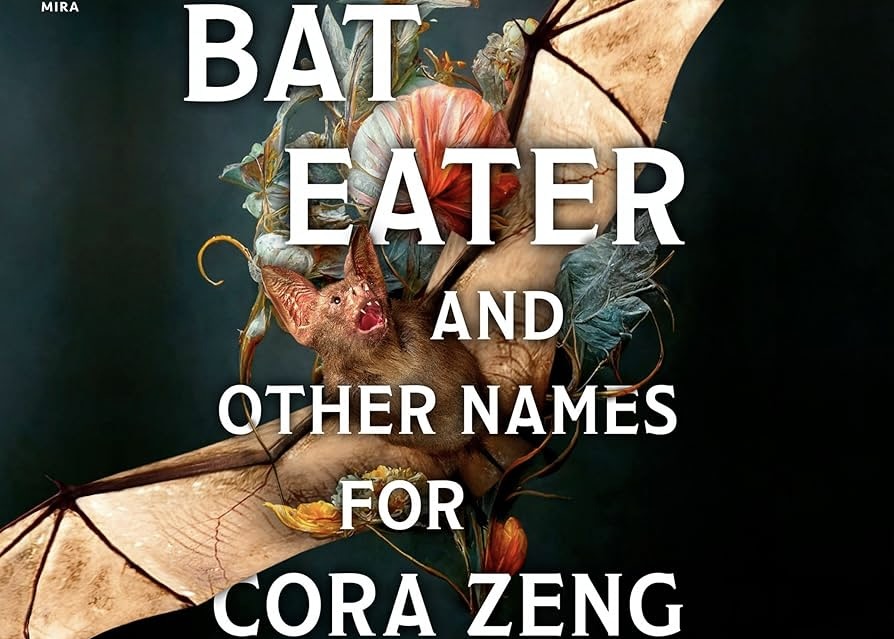

Alright, horror fiends, buckle up for a ride through the gore-soaked, ghost-haunted streets of Bat Eater and Other Names for Cora Zeng by Kylie Lee Baker. This novel is a savage blend of supernatural chills, real-world rage, and enough blood to make your average slasher flick look like a kid’s cartoon. It’s a book that’ll grab you by the throat, spit in your face, and leave you thinking about it long after you’ve scrubbed the imaginary viscera off your hands. Let’s dive in.
Kylie Lee Baker’s no stranger to weaving dark tales with cultural depth. A mixed-race Chinese-American writer, she’s got a knack for blending folklore with visceral storytelling, as seen in her YA duology The Scarlet Alchemist and The Keeper of Night. With Bat Eater, she steps into adult horror, and holy shit, does she deliver. Baker’s background informs her work—her perspective as an Asian-American woman navigating identity and systemic bullshit seeps into every page. She’s got a master’s in creative writing, which probably explains why her prose cuts like a well-sharpened cleaver, and she’s not afraid to tackle heavy topics like racism and grief while throwing in hungry ghosts that’d make your grandma shit her pants. Baker’s the kind of author who’d probably laugh at her own jump scares, and I’m here for it.
Set in New York City during the COVID-19 lockdown of 2020, Bat Eater follows Cora Zeng, a Chinese-American woman who’s barely holding it together after witnessing her sister Delilah get shoved in front of a subway train by a racist asshole screaming “bat eater.” Yeah, it’s as brutal as it sounds. Months later, Cora’s scraping by as a crime scene cleaner—mopping up blood and guts in Chinatown while dodging germs like they’re the goddamn plague (pun intended). But shit gets weirder when she starts noticing bat carcasses at murder scenes, all of them East Asian women. Oh, and she’s being haunted by a hungry ghost—straight out of Chinese folklore—that’s chomping on her coffee table and clawing at her sanity. As Cora teams up with her coworkers Harvey and Yifei, she’s racing against a serial killer, her own trauma, and spirits who don’t take kindly to being ignored. It’s a horror show wrapped in a mystery, with a side of brutal societal commentary.

Bat Eater layers themes so thick you’ll need a hazmat suit to wade through them. At its core, it’s about grief—Cora’s drowning in it after Delilah’s death, and the hungry ghosts are a screaming metaphor for unresolved pain. These spirits, rooted in Chinese mythology, embody the forgotten dead, gnawing at the living until they’re remembered. It’s like Baker’s saying, “Ignore your trauma, and it’ll eat your damn furniture.”
Then there’s racism, and fuck, does this book lay it bare. The title Bat Eater is a vicious nod to the anti-Asian slurs hurled during COVID, blaming Chinese people for the virus. Bats, left at crime scenes, symbolize this dehumanization—pests to be exterminated, just like the killer sees his victims. Baker doesn’t sugarcoat the xenophobia Cora faces, from spit in her face to slurs carved into her psyche. It’s raw, real, and makes you want to punch a wall.
Mental illness weaves through Cora’s OCD and germaphobia, amplified by the pandemic’s paranoia. Her compulsions—sanitizing everything, fearing contamination—are a mirror to society’s fear of the “other.” The hungry ghosts could be read as hallucinations, but Baker’s too smart to pull a cheap “it’s all in her head” twist. Instead, she balances the supernatural with psychological horror, leaving you questioning what’s scarier: the ghosts or Cora’s unraveling mind.
Community sneaks in through Cora’s reluctant bonds with Harvey and Yifei. They’re the found family she didn’t ask for, cracking dark jokes while scrubbing bloodstains. It’s a reminder that even in hell, connection keeps you sane—or at least keeps you from becoming ghost chow.
Symbolically, the subway is a claustrophobic stand-in for Cora’s trapped existence—always moving, never escaping. The Hungry Ghost Festival, ignored by Cora at her peril, underscores the cost of disconnecting from culture. Baker’s saying, “Forget your roots, and you’re fucked,” but she does it with style, not a lecture.
Bat Eater screams a message: systemic racism kills, and society’s complicity is the real monster. Baker’s author’s note calls out the U.S. government’s shitshow pandemic response and the scapegoating of Asians. Cora’s fight against a serial killer mirrors the broader battle against hate crimes, where justice is a pipe dream. The lack of a neat resolution—sorry, no Scooby-Doo unmasking here—drives home the point: real-world horrors don’t always get a tidy ending. It’s a bold “fuck you” to the idea that everything’s fine now that COVID’s “over.” Baker wants you to feel the rage, the grief, and the urgency to do better, and she’s not subtle about it. Good. Subtlety’s overrated when you’re wading through blood and bat guts.

Baker’s prose is a thing of beauty, like a perfectly executed disemboweling. She’s got a lyrical edge that makes even the goriest scenes—crunching bones and oozing viscera—read like poetry. She has vivid descriptions; you’ll smell the coppery blood and hear the ghosts’ claws scratching. Her dialogue’s sharp, with Harvey and Yifei tossing out dark humor that’s like a life raft in the shitstorm. Cora’s internal monologues can drag (more on that later), but they’re raw, capturing her anxiety with suffocating precision.
Baker’s pacing is a bit like a drunk driver—thrilling but uneven. The opening chapter’s a sledgehammer, and the last 20% is a relentless sprint, but the middle sags like a deflated corpse. Still, her ability to blend folklore, gore, and social commentary without tripping over her own feet is impressive as hell.
Strengths:
- Horror That Hurts: The ghosts are creepy as fuck—think The Grudge meets Junji Ito—but the real terror is the racism and grief. Baker makes you feel both, no mercy.
- Cultural Depth: The Hungry Ghost Festival and Chinese folklore are woven in seamlessly, educating without preaching. It’s a love letter to heritage wrapped in barbed wire.
- Characters You Root For: Cora’s a mess, but you’ll cheer for her. Harvey and Yifei are the buddies you’d want in a zombie apocalypse—funny, loyal, and not too judgy when you’re losing it.
- Social Commentary: This book’s got balls, tackling anti-Asian hate head-on. It’s a wake-up call.
- Gore Galore: If you love your horror bloody, Baker delivers. Crime scenes are described with a relish.
However, Bat Eater trips over a few bones. The pacing is a big gripe—after a killer start, the middle gets repetitive, with Cora cleaning one too many crime scenes. It’s like watching a slasher flick where the killer takes a nap. It’s a bit YA-ish; the dialogue occasionally feels like it’s auditioning for a teen drama, which jars with the adult themes.
The serial killer plot doesn’t fully land. It’s gripping, but the resolution’s rushed, and not knowing the killer’s identity feels like a tease gone wrong. A few plot holes—how do these bats keep showing up?—make you raise an eyebrow.
Cora herself can be a drag. Her dullness is intentional, reflecting grief, but spending half the book in her mopey head gets old. She’s overshadowed by Delilah’s memory, and yeah, it’s hard to care about someone who’s barely there.
Finally, the dual narratives—ghosts vs. murders—don’t always mesh. Sometimes it felt like two stories were fighting for space, and the supernatural can overshadow the real-world horror, diluting the impact.
Ultimately, though, Bat Eater and Other Names for Cora Zeng is a brutal, beautiful beast of a book. It’s not flawless but it’s got more heart and guts than most horror novels dare to show. Baker’s a fearless storyteller, blending Chinese folklore with the raw pain of racism and grief in a way that’ll leave you haunted and pissed off in the best way. For horror fans who want their scares with a side of social reckoning, this is your jam.



MIRA
Published April 29, 2025
 The Blog Without a Face
Leave a comment