

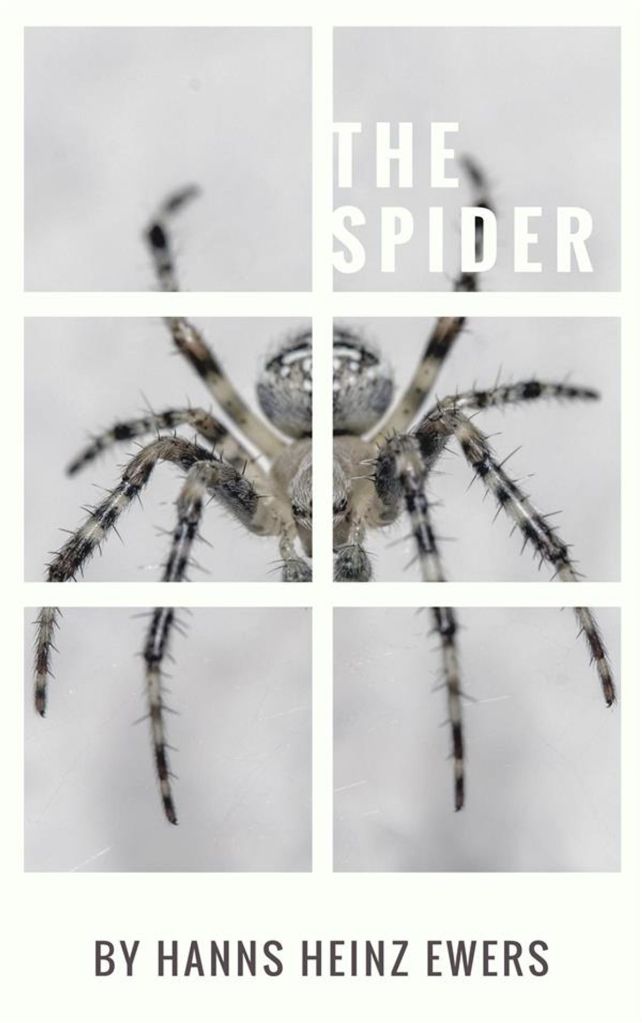
In the annals of horror literature, few names evoke as much intrigue and unease as Hanns Heinz Ewers. A writer, poet, actor, and philosopher, Ewers carved a place for himself in the early 20th-century horror landscape with his unique blend of decadence, mysticism, and psychological horror. Among his works, The Spider (1915) stands as one of his most compelling and insidious short stories. Now, on its 110th anniversary, it’s time to reexamine this tale—a masterclass in creeping dread and hypnotic horror that still ensnares its readers in a web of existential terror.
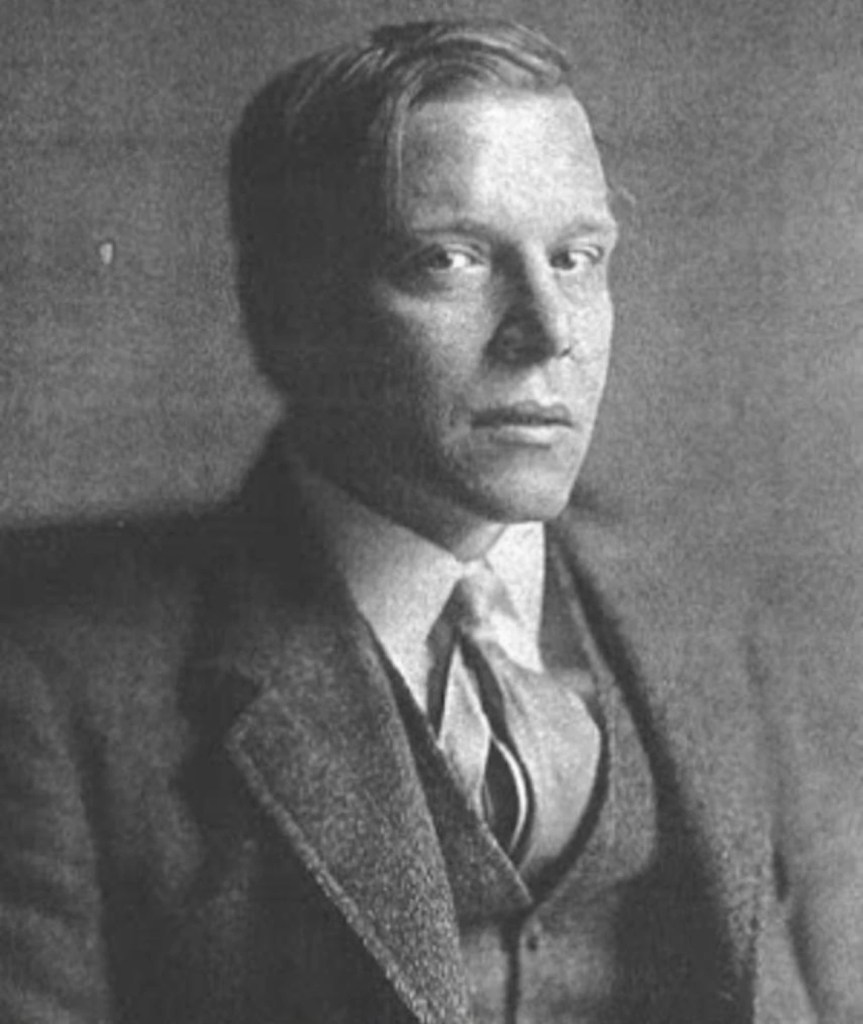
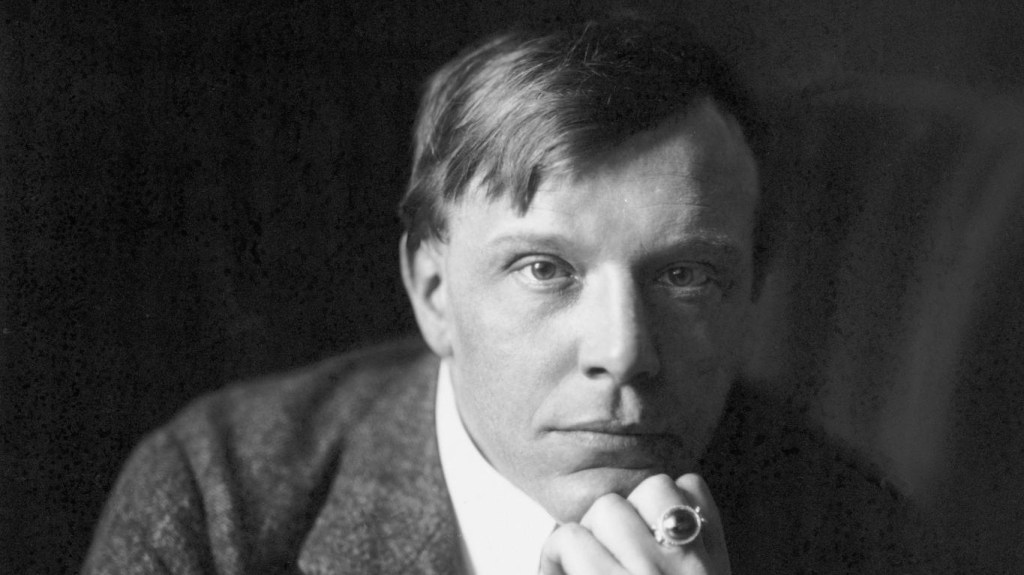
Ewers remains a deeply controversial figure, not just for his contributions to horror fiction but also for his political entanglements. Born in 1871 in Düsseldorf, Germany, Ewers was a man of many artistic pursuits. He was fascinated by decadence, the occult, and the interplay between the human psyche and external malevolent forces. A self-styled “literary sorcerer,” he was deeply influenced by Edgar Allan Poe and frequently explored themes of possession, insanity, and supernatural predation.
His legacy is complicated by his early involvement with the Nazi Party, a connection that ultimately led to his downfall when he fell out of favor with the regime. Despite this, his literary influence is undeniable—H.P. Lovecraft and Thomas Ligotti both echo elements of Ewers’ uniquely unsettling vision.
At its core, The Spider is a tale of obsession, psychological manipulation, and an unknown horror lurking just beyond the veil of human understanding. The story follows Richard Bracquemont, a medical student who voluntarily takes up residence in a cursed room where three previous occupants have hanged themselves under eerily similar circumstances.
Initially skeptical of any supernatural cause, Bracquemont documents his stay in the room with the detached curiosity of a scientist. However, as the days pass, he becomes increasingly enraptured by a mysterious woman in a neighboring window—Clarimonda—who seems to mirror his every movement. What begins as a game of observation spirals into something far more sinister as Bracquemont slowly loses control of his own will.
By the time his inevitable demise arrives, the horror has shifted from external to internal. The final revelation—that Bracquemont dies with a massive black spider crushed between his teeth—seals the story’s central theme: a mind fully ensnared, destroyed by an unseen force that exerts total control over its prey.
Ewers was a master of layering horror with psychological depth, and The Spider is rich with symbolic meaning. Here are some of the most compelling themes:
- Hypnosis and Mind Control: The story operates on the premise that external forces—be they supernatural or psychological—can completely override human agency. Clarimonda’s silent influence over Bracquemont mirrors the phenomenon of mesmerism, a popular fascination in the early 20th century. The slow erosion of his will is what makes the horror so profoundly unsettling.
- The Fatal Attraction of the Abyss: There’s an existential horror at play in The Spider, one reminiscent of Nietzsche’s famous warning: “If you gaze long into an abyss, the abyss also gazes into you.” Bracquemont’s obsession with Clarimonda begins as a casual curiosity but soon spirals into an all-consuming fatal attraction.
- The Feminine as Predatory Force: Ewers taps into the archetype of the femme fatale but elevates it to cosmic horror. Clarimonda, named after Théophile Gautier’s vampiric temptress, is both alluring and deadly. She ensnares Bracquemont as a spider does its prey, a metaphor made literal in the story’s chilling final image.
- The Uncanny and Doppelgänger Effect: The mirroring behavior between Bracquemont and Clarimonda evokes the eerie sensation of the ‘double’—an entity that both fascinates and horrifies. It suggests that the protagonist’s destruction is not just at the hands of an external force, but rather the unveiling of something dormant within himself.
Ewers’ prose in The Spider is methodical, clinical, and disturbingly immersive. By presenting the story as Bracquemont’s personal journal, Ewers lures the reader into a false sense of security, as though they are simply observing a psychological case study. However, the first-person perspective also ensures that as Bracquemont’s mind unravels, so too does the reader’s grip on reality. The pacing is deliberate, mirroring the gradual tightening of a noose. Small, seemingly innocuous details—a glance exchanged, a mirrored gesture—accumulate until the horror becomes inescapable. There’s a fever-dream quality to the latter half of the story, where logic dissolves into pure compulsion. The ending, abrupt and horrifying, delivers a final, suffocating jolt.
Strengths:
- Unmatched Psychological Horror: The real terror in The Spider isn’t in explicit gore or supernatural spectacle but in the gradual loss of control. The story gets under the skin and stays there.
- Masterful Symbolism: The use of the spider as a central motif is genius, evoking the idea of a predator spinning a web around an unsuspecting victim. The horror is both physical (a spider literally in Bracquemont’s mouth) and existential (the inescapable pull of obsession).
- A Timeless Narrative: Despite being over a century old, the story’s themes—compulsion, psychological ensnarement, the power of suggestion—remain disturbingly relevant, especially in the age of digital manipulation and algorithmic control.
Critiques:
- A Dated Perspective on Gender: While effective as horror, the story leans heavily on the trope of the “dangerous woman” whose mere presence drives a man to destruction. This plays into long-standing fears of female agency and mystique, though it is mitigated by the story’s psychological depth.
- Pacing May Frustrate Modern Readers: Readers accustomed to faster, more action-driven horror might find the methodical unraveling of the protagonist slow-moving. However, for those who appreciate a creeping dread, this is a feature, not a bug.
Ewers’ The Spider remains one of the most effective horror stories of its era. It is a tale of quiet terror, of the unseen forces that can infiltrate a mind and twist it toward its doom. Its hypnotic, claustrophobic narrative still has the power to grip modern readers, proving that true horror is not in what we see, but in what we cannot resist. Whether you’re a seasoned horror aficionado or a newcomer to the genre, this is a tale worth reading—with the lights on and the windows shut. And maybe, just maybe, keep an eye on that spider in the corner of your room. You never know who—or what—is staring back.


Published 1915


 The Blog Without a Face
Leave a comment