
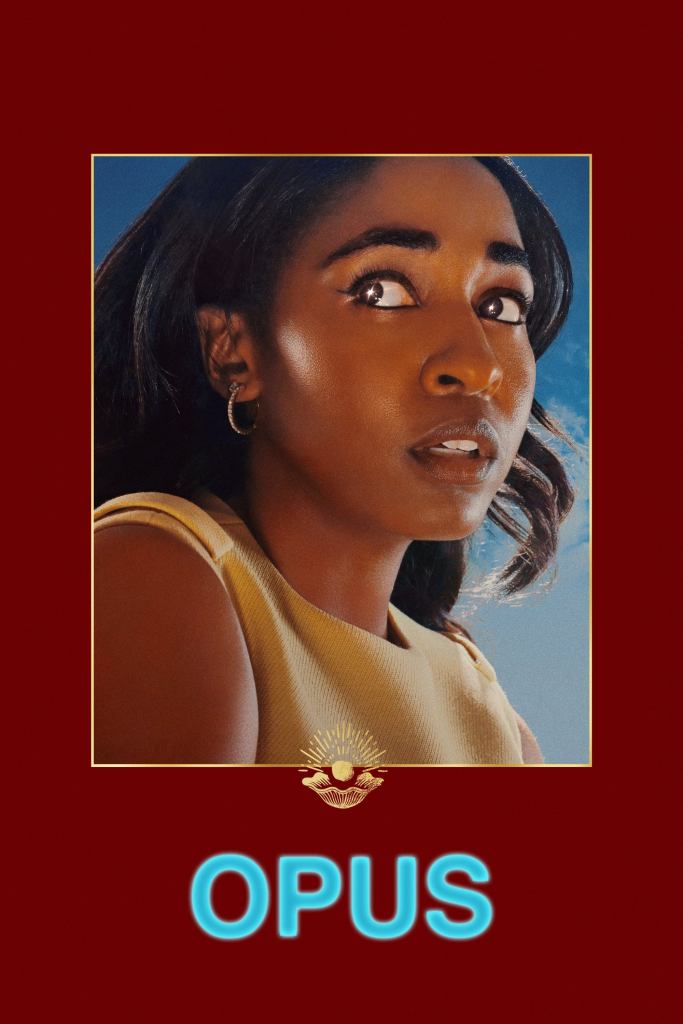
Welcome back, you twisted horror freaks, to another deep dive into the bloody guts of cinema’s latest offerings. Today, we’re slicing into Opus, the feature debut from Mark Anthony Green, a former GQ style scribe turned filmmaker, dropped by the ever-pretentious A24 crew. This flick’s got all the glossy trappings you’d expect from the studio that’s made “elevated horror” its bitch—gorgeous visuals, a killer cast, and a premise dripping with cultish intrigue. But here’s the rub: beneath its shiny veneer, Opus is derivative, recycling every trope in the book without saying a damn thing worth hearing. Still, I’m a sucker for a well-crafted cult story, so let’s crack this bastard open and see what’s bleeding inside.
Mark Anthony Green’s no stranger to the glitzy world of celebrity—he spent years at GQ profiling the likes of Donald Glover and The Weeknd, rubbing elbows with the fame-obsessed elite. You’d think that insider cred would give him a razor-sharp edge to carve up the parasitic nature of stardom and journalism, but Opus feels like he traded his pen for a dull butter knife. For a guy who’s seen the media machine up close, Green’s debut is shockingly fangless, like he’s too afraid to piss off his old pals to really go for the jugular. This isn’t some rookie flailing in the dark, though—he’s got A24’s deep pockets and a slick crew behind him, so the film looks like a million bucks (probably more). Too bad the script’s half-baked that can’t decide if it’s a satire, a thriller, or just a fancy music video for John Malkovich’s weird-ass crooning.
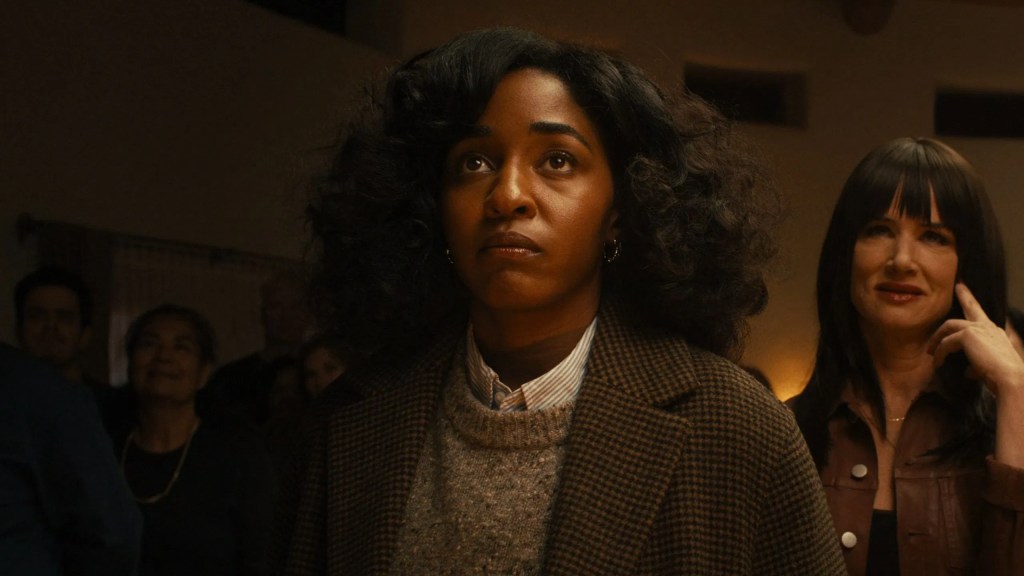
Here’s the skinny: Opus follows Ariel Ecton (Ayo Edebiri), a 27-year-old music journo who’s stuck in the purgatory of a glossy mag, her pitches constantly swiped by her smarmy editor, Stan Sullivan (Murray Bartlett). She’s the “middle as fuck” everyman—too normal to stand out, too ambitious to quit. Then, bam, a golden ticket lands in her lap: an invite to the desert compound of Alfred Moretti (John Malkovich), a ‘90s pop god who’s been MIA for 30 years and is now hyping his comeback album, Caesar’s Request. Ariel’s joined by a gaggle of media vultures—Stan, a gossipy TV host (Juliette Lewis), a paparazzo (Melissa Chambers), an influencer (Stephanie Suganami), and a podcaster (Mark Sivertsen)—all drooling for a piece of Moretti’s mystique.
They roll up to this sprawling Utah estate, greeted by blue-robed weirdos called Levelists who worship Moretti like he’s Jesus with a keytar. Phones are confiscated, concierges shadow their every move, and the vibe screams “cult” louder than a Manson family reunion. Ariel’s the only one with a functioning brain, sniffing out the sinister shit while everyone else fawns over Moretti’s anemic pelvic thrusts and glittery getups.

Spoiler alert: people start dying—and it’s revealed Moretti’s got a boner for some vague revenge against the press. Ariel scrambles to survive, escapes a cyanide-soaked finale, and two years later, she’s a bestselling author. Oh, and Moretti’s in jail, but his cult’s still kicking, because of course it is.
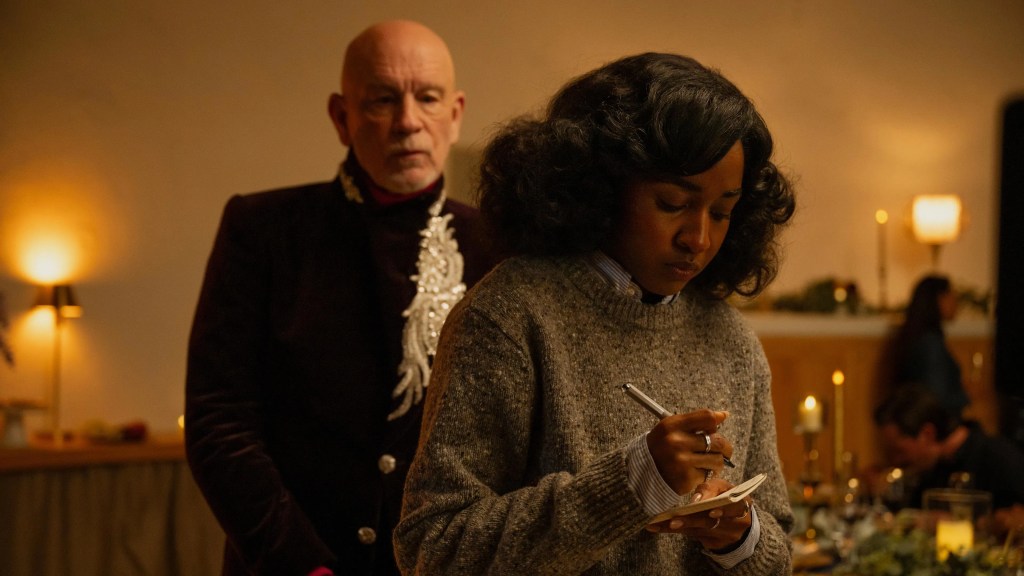
Opus wants you to think it’s deep, tossing around themes like celebrity worship, the media’s parasitic ass-kissing, and the blurry line between fandom and cultism. Moretti’s compound is a gilded cage, a symbol of fame’s isolating excess, complete with oyster-shucking nutjobs and a puppet show where Billie Holiday gets grilled by rat-faced journalists (yeah, it’s as batshit as it sounds). The Levelists, with their artsy-fartsy rituals and blind devotion, are a stand-in for fans who’d lick the boots of their idols if asked. Ariel’s notebook—where she jots “creepy greeter” and underlines it like a goddamn detective—represents the last gasp of skepticism in a world of sycophants.
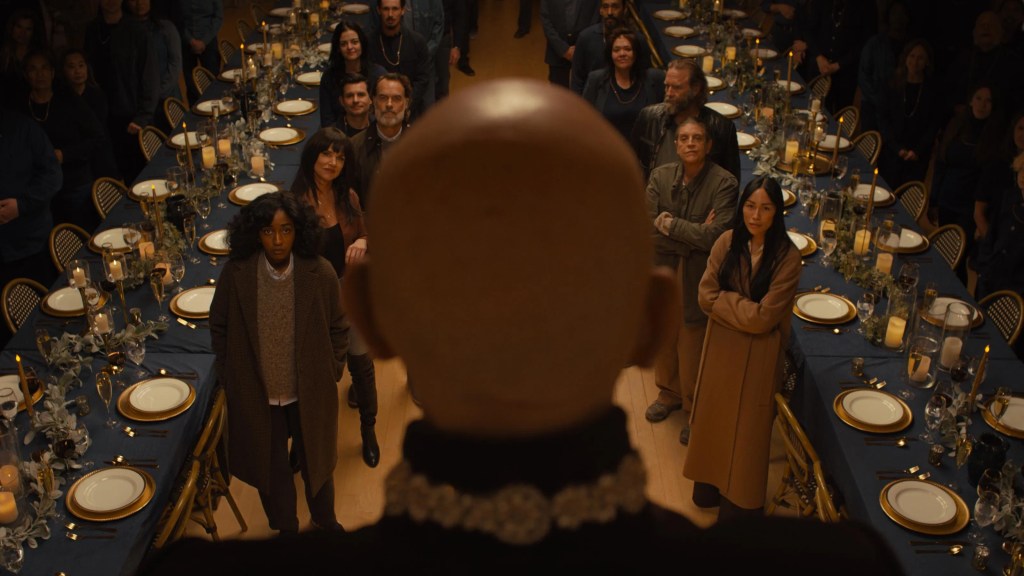
But here’s the kicker: none of this shit lands. The symbolism’s as subtle as a sledgehammer and twice as shallow. Green’s too busy aping Midsommar’s sun-bleached dread or The Menu’s elitist slaughter to craft anything original. The bread-sharing scene—meant to be a “purity test”—is just gross for grossness’ sake, and the pearl necklaces popping up in the epilogue feel like a cheap nod to cult persistence without earning it. It’s all style, no substance, like a Instagram filter slapped on a blank canvas.
Green’s got a front-row seat to the fame game, so you’d expect Opus to skewer the hell out of celebrity culture and the hacks who prop it up. Instead, it’s a limp-dick rant that can’t pick a target. Is it about how stars turn into gods? How journalists sell their souls for access? How fans lose their minds over mediocrity? Fuck if I know—it’s all of that and none of it, a word salad of half-baked ideas. Moretti’s motive—some vague beef with the press—feels tacked on, and Ariel’s arc from nobody to survivor is predictable as hell. The film’s big “aha” moment—that hype can be manufactured from nothing—gets drowned in its own self-important noise. For a guy who’s seen the media’s underbelly, Green’s critique is softer than a marshmallow in a microwave.

The screenplay’s the real villain here. Green’s dialogue swings from expository monologues to quips that don’t land (“How’s your lady garden?”—seriously?). Characters are cardboard cutouts—Ariel’s the smart one, Stan’s the dick, Moretti’s the weirdo—and the plot’s a lazy retread of every “rich asshole lures idiots to their doom” flick since Get Out. The pacing’s a slog, dragging its ass through a setup that screams “cult!” from minute one, only to rush the kills and fumble the twist. It’s like Green had a killer pitch—“Willy Wonka, but a pop star with a murder cult”—and then forgot to write the second half. The epilogue, with its “ooh, the cult lives on” tease, is a cheap cop-out that doesn’t earn its chills.
John Malkovich is the beating heart of this mess, and thank fuck for that. As Moretti, he’s a slithering, campy delight—part Bowie, part Bond villain, all Malkovich. He sings his own tunes (penned by Nile Rodgers and The-Dream, no less) and gyrates like a disco snake, owning every frame with a mix of menace and absurdity. It’s the kind of unhinged shit that makes you forgive the film’s flaws for a hot minute. That being said as much as I love Malkovich, I have a hell of a time buying him as a pop star even if he’s the perfect cult leader. Ayo Edebiri’s solid as Ariel, bringing a dry wit and quiet grit to a role that’s more plot device than person—she’s the Final Girl we root for, even if she’s stuck in neutral. Murray Bartlett’s Stan is a smarmy prick you love to hate, but he’s undercooked, like most of the cast. Juliette Lewis, Amber Midthunder, Tony Hale—they’re all wasted, floating through scenes with nothing to chew on. It’s a damn shame, because this ensemble could’ve torn the roof off with a better script.
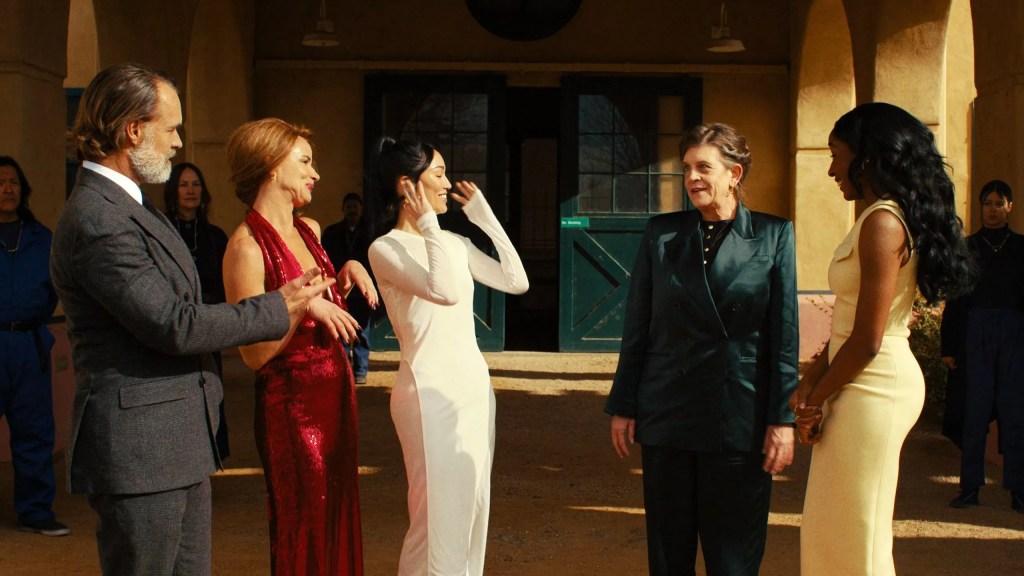
Visually, Opus is a stunner—Tommy Maddox-Upshaw’s cinematography bathes the desert in a dreamy glow, and Shirley Kurata’s costumes (think Bowie meets Elton John on acid) are a feast for the eyes. The score by Danny Bensi and Saunder Jurriaans hums with eerie vibes, and those Moretti tracks? Catchy as hell, even if they don’t scream “pop icon.” Malkovich’s performance is a twisted cherry on top, and there’s a perverse thrill in watching him prance around while shit hits the fan. For a horror blog junkie like me, the cult aesthetic—robes, rituals, and all—scratches an itch, even if it’s a familiar one.
But let’s not kid ourselves: Opus is a goddamn Xerox of every A24-adjacent thriller from the last decade. Midsommar’s cult vibes, The Menu’s elite slaughter, Blink Twice’s remote hellscape—it’s all here, minus the spark. The plot’s so predictable you could set your watch to it, and the scares are as limp as a wet noodle. The flick is too chickenshit to push the weirdness or violence far enough, leaving us with a film that’s neither funny nor frightening—just a pretty corpse with no pulse. For all its polish, Opus has nothing new to say about fame, cults, or journalism, making it a frustrating waste of talent and time.
Opus is a beautiful letdown—a cult story that looks like a dream but feels like a rerun. Malkovich and Edebiri keep it watchable, and the production’s slick enough to fool you into caring for a bit. But beneath the gloss, it’s a hollow shell, recycling tropes without a shred of originality or guts. For horror fiends who dig a well-made cult flick, it’s a decent Saturday night distraction—just don’t expect it to linger past the credits. Now, if you’ll excuse me, I’m off to rewatch The Menu and Midsommar and remind myself what this shit’s supposed to look like when it’s done right.
Our Rating
Director: Mark Anthony Green
Writer: Mark Anthony Green
Distributor: A24
Released: March 14, 2025

Kill Count = 5
Bill gets his head lopped off.
Emily chokes on her own hype after getting poisoned.
Stan takes an arrow to the chest and eventually gets stabbed to death.
Clara gets her scalp pulled off with her wig and stabbed to death.
Bianca gets stabbed to death too.

The Golden Machete
By default, goes to the poisoning of the influencer. The nasty swollen tongue and eyes were a nice touch.
 The Blog Without a Face
Leave a comment