

Mysterious authors and horror fiction go together like haunted houses and bad decisions—one just doesn’t exist without the other. Enter Uketsu, a faceless, masked YouTube figure whose voice drips through the screen like syrup laced with something sinister. Known for their unsettling videos, Uketsu has now delivered their brand of eerie storytelling to the printed page with Strange Pictures, a novel that refuses to settle into just one genre. It’s a mystery. It’s horror. It’s a puzzle with pieces scattered across decades. Most importantly, it’s unsettling in a way that makes you check twice before turning the next page. If you’ve ever wanted to experience the creeping dread of watching a cursed VHS tape but in book form, congratulations—your nightmare is here.
Let’s start with the enigma at the center of this whole spectral production. Uketsu is an internet-born storyteller, a YouTuber whose channel is home to bizarre and often disturbing short stories told through a modulated voice and an unsettling, expressionless mask. If you crossed Slender Man with an avant-garde filmmaker who only uses eerie children’s toys as props, you’d get something close to Uketsu. Their literary debut in Japan in 2021 took the country by storm, and since then, Uketsu’s books have clawed their way up bestseller lists like a vengeful spirit emerging from a well. With Strange Pictures, Uketsu proves they’re more than a digital specter—they’re a master of dread in any medium. But does the novel hold up to its legend?

Strange Pictures is structured like a fragmented dream—a collection of four interwoven chapters, each seemingly disconnected until the novel forces you to smash them together like puzzle pieces that may or may not form a recognizable picture.
It begins with a psychology professor analyzing a picture drawn by an eleven-year-old girl who—oh, just a minor detail—was arrested for murdering her mother. The professor dissects the illustration, revealing disturbing insights about the child’s psyche. And just when you think this is going to be a straightforward exploration of trauma through art, the novel yanks you into different stories:

- A university student stumbles upon a blog that mysteriously deletes huge chunks of its history, leaving behind cryptic entries and eerie artwork.
- A mother, convinced she must protect her son from an invisible threat, begins to question her own reality.
- A would-be journalist investigates the decades-old case of an art teacher’s murder and quickly realizes that some secrets are better left buried.
As these seemingly disparate tales unfold, a dark thread ties them together—a series of haunting pictures that hold clues, hidden horrors, and revelations that will make you want to throw the book across the room.
At its core, Strange Pictures is a meditation on perception—how we see, what we choose to ignore, and the horrifying truths lurking just beneath the surface. The novel forces you to engage with its imagery, much like its characters must. Every picture within the book is a riddle, every blog post a breadcrumb leading to something unspeakable. It plays with the idea that art is both revealing and deceptive, that what we create can betray our deepest fears and desires.
Motherhood, loss, and trauma wind through the pages like ghostly fingerprints. The novel examines how women navigate fear—fear for their children, fear of societal expectations, and, sometimes, fear of themselves. It also shines a light on Japan’s generational struggles, particularly the “Lost Generation” burdened by economic instability and dwindling opportunities. But Uketsu isn’t just here for social commentary; they want to haunt your dreams.

Uketsu’s prose is precise, unadorned, and chilling in its simplicity. This isn’t the gothic horror of Dracula or the florid dread of Lovecraft—this is modern horror that thrives on ambiguity. Much like a J-horror film that refuses to explain its ghosts, Strange Pictures understands that the unknown is far more terrifying than anything explicitly described.
The narrative structure leans into this by forcing the reader to become an investigator. There’s no lead detective, no central protagonist to anchor the mystery—just a series of voices and stories that gradually align into something resembling an answer.
If there’s one critique here, it’s that Uketsu occasionally indulges in repetition. Some details are reiterated multiple times, as if the book doesn’t quite trust the reader to keep up. There are also moments where the novel overexplains its clues, slightly undercutting the eerie sense of discovery.

Strengths
- Atmosphere for Days – The creeping dread builds with every chapter. There’s a sense of wrongness that lingers after you’ve closed the book.
- Puzzle-Like Storytelling – For readers who love mysteries that require active participation, this book is an absolute treat.
- Visual Horror Done Right – The incorporation of drawings, blog posts, and other visual elements enhances the horror rather than feeling gimmicky.
- That Ending – Without spoilers, let’s just say it’s both satisfying and disturbing in equal measure. You’ll want to reread the book immediately to catch all the clues you missed.
Critiques
- Repetition, Repetition, Repetition – Some details are hammered home a little too often.
- Exposition Overload – At times, the novel stops to make sure you really understand a clue, which slightly dulls the impact.
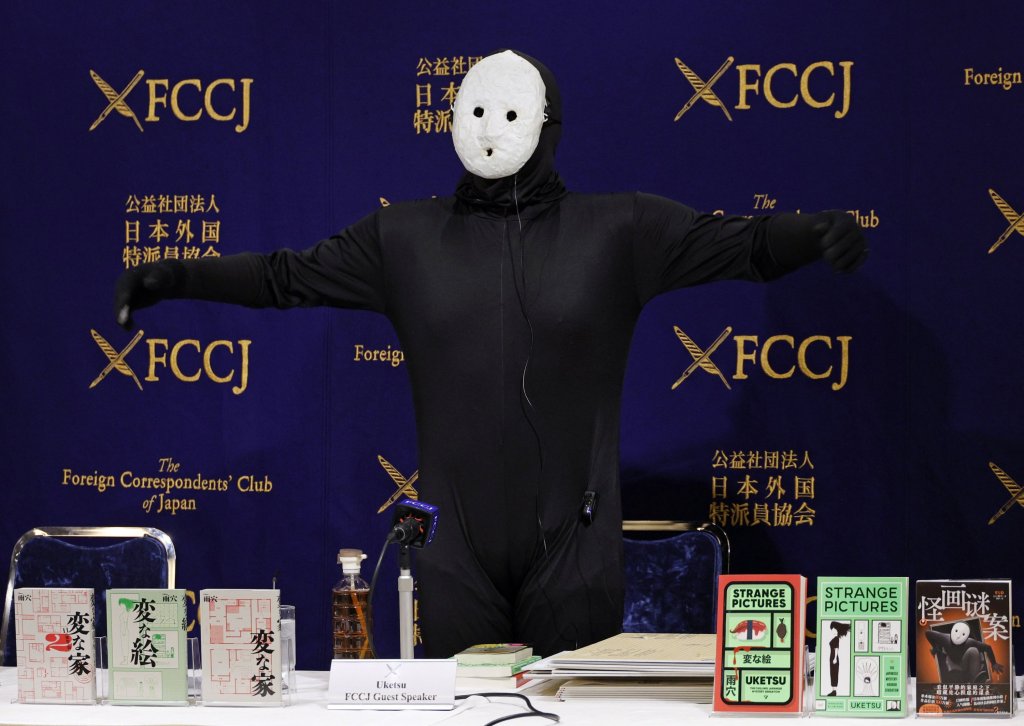
Strange Pictures is an experience. It’s a literary escape room, a psychological horror film trapped in paper, a mystery that forces you to question every detail. Uketsu’s debut in English translation proves that horror can thrive in any form, and this book is one of the most compelling and chilling genre entries in recent years. That said, if you’re looking for straightforward storytelling, this might not be your cup of tea. But if you love stories that unravel like a haunted tapestry woven from cryptic illustrations and whispered secrets, Strange Pictures is a ton of fun.


HarperVia
Published January 14, 2025
 The Blog Without a Face
Leave a comment