
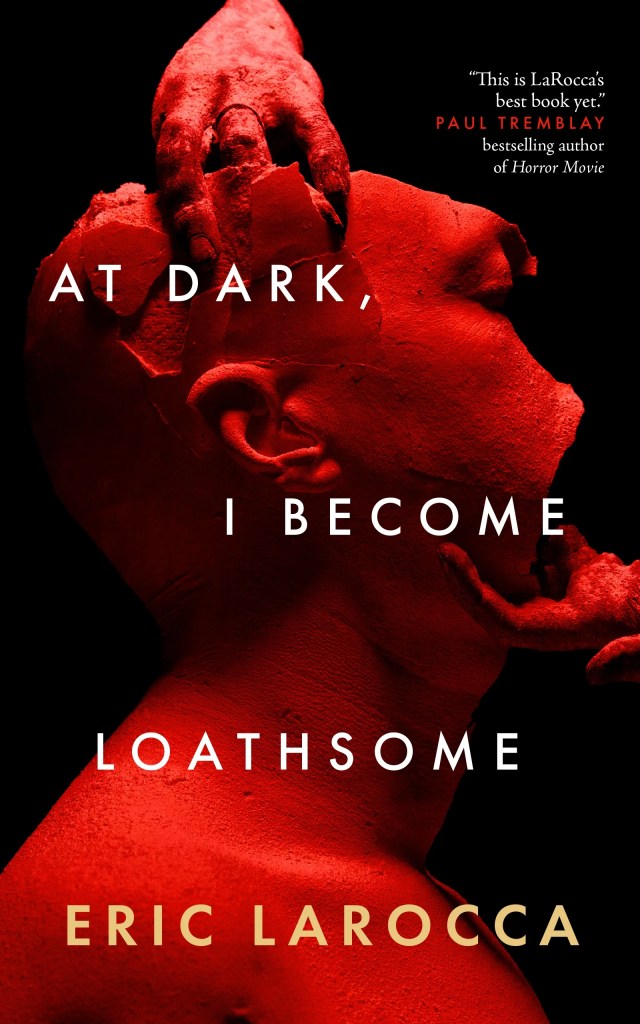
Eric LaRocca’s latest dive into the abyss, At Dark, I Become Loathsome, is a meditation on existential grief that spirals into utter horror and the depraved. If Things Have Gotten Worse Since We Last Spoke made you slightly queasy, this one will make you reconsider your entire life, all while whispering, “You liked that, didn’t you?” in your ear. That sentence didn’t make any sense… did it?
For those unfamiliar, Eric LaRocca (he/they) is an author of transgressive horror who seems to enjoy watching readers squirm. Their work is equal parts grotesque and poetic, tackling themes of trauma, queerness, and body horror with a literary finesse. LaRocca has been hailed as a leading voice in modern horror, and for good reason—At Dark, I Become Loathsome is a testament to their ability to blend beauty with abomination.
Ashley Lutin, a man marinated in self-loathing and grief, has lost everything—his wife to cancer, his son to a mysterious disappearance, and any semblance of sanity to an ongoing existential crisis. To cope, he’s developed a highly questionable “therapy” involving burying people alive for thirty minutes, allowing them to experience the finality of death before pulling them back, Lazarus-style, to appreciate life anew. Sounds healthy.
Things get extra fucked when Ashley meets a man named Jinx in an online chatroom. Jinx’s twisted tales quickly drag Ashley into an unraveling spiral of psychological torment and unspeakable horror. As Ashley clings to the hope that his son might still be alive, his own sense of morality begins to erode, leading to a climax that is as horrifying as it is heartbreaking.
LaRocca dissects the human condition with a rusty scalpel. At Dark, I Become Loathsome isn’t just about Ashley’s grief; it’s about identity, self-destruction, and the desperate measures people take to feel something—anything—other than pain. The novel delves into body modification as an externalization of internal suffering, the isolating effects of trauma, and the ethical limits of what constitutes “helping” someone in distress.
The title itself, At Dark, I Become Loathsome, functions as both a literal and metaphorical motif throughout the book. Darkness isn’t just the absence of light; it’s the place where Ashley’s worst impulses thrive. His grief is a parasite, feeding off his need for atonement, and the question lingers: is Ashley truly loathsome, or does he simply perceive himself that way?
The burial ritual is another clear symbol—rebirth, suffocation, surrender, and survival. It’s the ultimate test of whether someone truly wants to live. But, as the novel progresses, the lines between therapy and torment blur in ways that leave Ashley—and the reader—questioning the ethics of his methods.
LaRocca has a way of making even the most grotesque scenes feel poetic. Their prose is lush, lyrical, and unsettlingly intimate, often making the horror feel personal. This novel features epistolary sections, chat logs, and unsettling monologues that amplify the discomfort, making you feel like you’re trapped in Ashley’s decaying mind.
As LaRocca once said in an interview, “I wholeheartedly encourage folks to look up trigger warnings before reading.” Wise words, considering this book contains enough violence against animals, sex, and existential dread to make even the most seasoned horror reader squirm.
Strengths:
- Unrelenting Atmosphere: The book never lets up, immersing you in Ashley’s decaying world from page one.
- Complex Queer Horror: LaRocca seamlessly weaves queerness into their horror narratives, making for a deeply personal and necessary exploration of identity and self-loathing.
- Unique Premise: The burial ritual alone is enough to make this novel stand out in the genre.
- Beautifully Macabre Prose: LaRocca’s writing is both horrifying and breathtaking—think Clive Barker meets Dennis Cooper, but make it sadder.
Critiques:
- Narrative Digressions: I found the chatroom section and side stories a bit meandering. So much that I wonder if LaRocca prefers the short story format more than the novel. Some of the stories simply did not contribute to the book’s overall story.
- Not for the Faint of Heart: If you’re looking for a cozy horror read, kindly exit stage left. This book revels in discomfort, and some scenes will linger in your psyche.
- Ashley’s Self-Pity Can Get a Bit Much: While his grief is integral to the story, there are moments where you just want to shake him and scream, “Dude, get a grip!” Admittedly, my eyes rolled a few times.
At Dark, I Become Loathsome is Eric LaRocca at their most unflinching. It’s a novel that asks ugly questions and forces you to sit with the answers, whether you like them or not. If you enjoy horror that cuts deep—both emotionally and viscerally—this book is an absolute must-read… but keep a comfort blanket and some therapy money handy. You’re gonna need it.

Blackstone Publishing
Published January 27, 2025

 The Blog Without a Face
Leave a comment