


Ah, Companion. What a delightful, jarring little number. Written and directed by Drew Hancock in his feature debut, Companion lures you in with the promise of a cozy, idyllic weekend at a remote cabin with a charming couple, only to plunge you headfirst into an unholy concoction of horror, sci-fi, and darkly comedic shenanigans. If you think you’ve seen it all, think again. If you manage to avoid the absolutely boneheaded marketing campaign, this film can be the cinematic equivalent of a twisted magic trick that refuses to reveal its secrets.
Drew Hancock, a name you might not have heard before, is the mad scientist behind Companion. On his debut feature, Hancock serves up a cinematic stew that is equal parts fun and freaky. What impresses most about Hancock’s directorial vision is his ability to navigate between genres with a level of ease that most filmmakers would kill for. One moment, we’re laughing at an absurd moment of comic relief, and the next, we’re clutching our armrests as the film takes a sharp turn into unsettling psychological horror.
In interviews, Hancock has openly discussed how much he relished playing with audience expectations. “I wanted to make a film that keeps you guessing, and I knew that if we just leaned into one genre, it would lose the magic. It had to be unpredictable, a real ride. No one gets on a roller coaster to stay seated in the same spot,” he said in a 2024 interview. And oh, does this film succeed in that respect. It constantly shifts gears, never allowing the viewer to settle into a rhythm.

Companion opens innocently enough. We meet Iris (Sophie Thatcher; MaXXXine, Heretic, Yellowjackets) and Josh (Jack Quaid; Scream, The Boys, Tragedy Girls), a seemingly perfect couple embarking on a weekend getaway to a remote lake house with some friends. A brief moment of sweetness: Iris wakes up from a nap and tells Josh that she dreamt about him. Ahh, young love, right? Cue the next 20 minutes of anxiety, as everything about this idyllic setup is upended in a manner that’s simultaneously mind-bending and, dare I say, fun.
Without spoiling the entire plot (for those of you who, like me, managed to go into this film blind), the twist here is a good one: Companion never quite lets you know what’s real and what isn’t. As the story unfolds, we are asked to ponder the nature of human connection, trust, and the lengths to which people will go to protect themselves—sometimes at the expense of others. Hancock himself put it best: “The twist isn’t just a plot point. It’s an invitation to question everything you thought you knew about the characters.”
The themes of Companion are layered and pulled back gradually as the film unfolds. On the surface, it’s a story about relationships, trust, and betrayal. But delve a little deeper, and you’ll find something much darker bubbling beneath the surface. The film’s title itself is a symbol—at first, a sweet, comforting notion, but by the end, you may never think of a “companion” in the same way again.
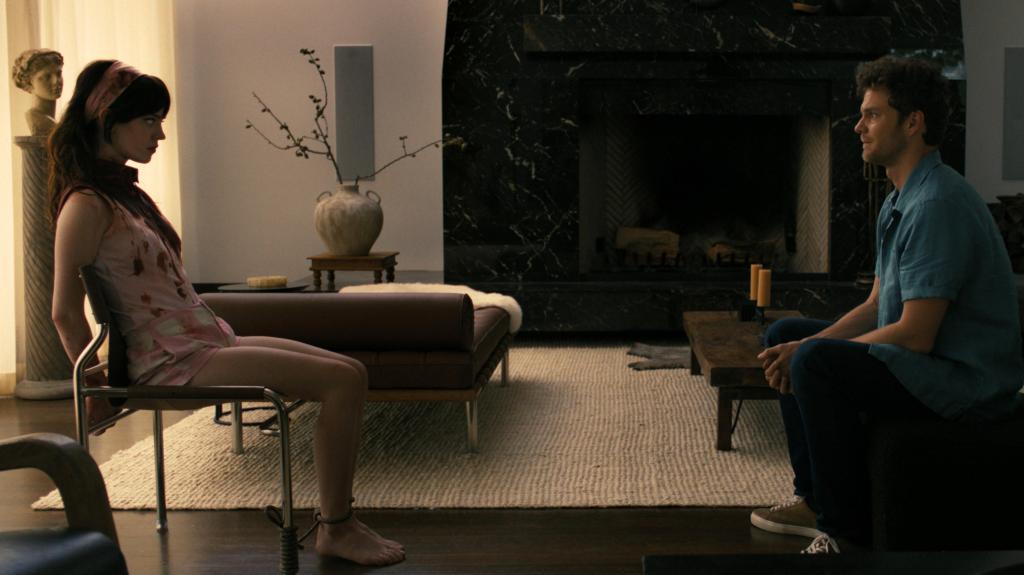
There’s also the persistent commentary on technology and the human condition , which isn’t surprising for a film that blends sci-fi elements with horror. Hancock has mentioned that he was inspired by the ethical dilemmas surrounding artificial intelligence, stating, “I wanted to ask the question, ‘What happens when our creations start to mirror the people they were built to serve?’ It’s a scary thought. What if our companions—whether human or machine—aren’t who we think they are?” Can’t say this is a particularly original question posed in genre films, but it is explored in a fun and exciting way, nonetheless.
The film’s reliance on unreliable narratives and characters forces the audience to reevaluate their allegiances, mirroring our modern-day paranoia about trust, technology, and identity. If you think you’ve got a character figured out, think again. And that uncertainty is what makes the film captivating and terrifying.
Cinematographer Eli Born (Super Dark Times, Hellraiser, The Boogeyman) takes us on a visual journey that feels as inviting as it does unsettling. The lake house is framed beautifully, with sweeping shots of tranquil landscapes, serene waters, and an aura of domestic bliss. But as the film’s tone shifts, so does the cinematography. The once-welcoming warmth of the sun-drenched lakeside cabin starts to feel like a suffocating tomb. The light gets harsher, the shadows longer, and before you know it, you’re holding your breath as a quiet, unsettling scene morphs into something out of a nightmare.

Born’s use of tight, claustrophobic shots when characters are in emotional or physical peril serves as a visual cue for the audience. The more confined the space, the more strained the relationships and the narrative tension. It’s a trick that works wonders in building suspense. Hancock also had something to say about this technique in an interview with IndieVision: “The beauty of the landscape is there to lull you into a false sense of security. Once we start to shift gears, the visuals follow suit. I wanted the audience to feel trapped by both the environment and the characters.”
If you’re someone who enjoys a witty, irreverent script with enough dark humor to make you laugh and squirm at the same time, Companion has you covered. The dialogue is sharp, often bordering on absurd, but always in service of the narrative. Hancock’s ability to write clever, bite-sized exchanges between characters injects the film with levity even in the darkest moments. His writing is both playful and menacing.
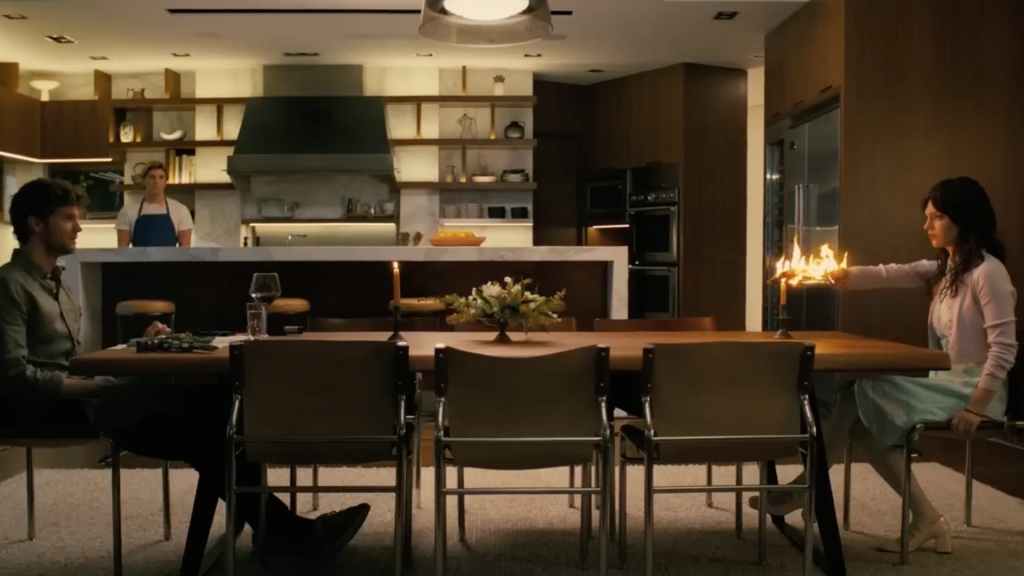
As Hancock put it: “I wanted the humor to be a shield, a way for the characters—and the audience—to protect themselves from the horror. It’s easier to deal with a scary situation if you can laugh about it, right?” And, let me tell you, there are some moments where the humor comes in just the right amount to make the chaos all the more unsettling when it hits.
There’s so much to love about Companion. First, it’s a genre-bender that’s executed with precision. The film is unafraid to shift gears between suspense, horror, sci-fi, and comedy, all without skipping a beat. Hancock’s direction and the actors’ performances create a balance that allows the audience to feel both engaged and off-kilter, which is no easy feat.
Second, the performances, particularly by leads Sophie Thatcher and Jack Quaid, are engaging and real. Even in the midst of the weirdness, you care about these characters and their fates, which is rare in films that are so plot-driven. It’s hard to remain invested when you’re constantly questioning what’s real, but Hancock’s script and the actors’ nuanced portrayals pull it off.

Lastly, the symbolism and philosophical undertones of the film—questions of identity, love, and morality—are not just surface-level musings. Companion poses tough questions and clearly takes a particular stance that certain toxic men out there will probably bitch about. Is it a bit preachy or self-righteous? Maybe so, but I don’t give a fuck – I’m 100% behind this messaging.
Companion has a couple of hiccups. At times, the narrative’s pacing feels a bit uneven, particularly in the second act. The constant shifting between different tones can occasionally feel jarring. There’s also the slight issue of a few plot points that are more predictable than others, especially for viewers familiar with genre tropes.
Additionally, while the dark humor is a standout feature, there are moments where the film leans a little too heavily into it, potentially undercutting the gravitas of the horror. But, hey, maybe that’s part of the point: life’s terrifying, but we all laugh through it anyway, right?

In a month where there is typically a paucity of quality genre films, this is a surprisingly refreshing movie. Companion is a breath of fresh air. Drew Hancock’s debut is an exhilarating, mostly unpredictable ride that’s equal parts horror, comedy, and science fiction, with a hefty dose of existential reflection to boot. It’s a film that doesn’t just want you to be entertained—it wants you to think. It will make you laugh, make you cringe, and at the end of it all, leave you asking, “What the hell just happened?” Companion is one you shouldn’t miss.


Our Rating
Director: Drew Hancock
Writer: Drew Hancock
Distributor: Warner Bros. Pictures
Released: January 31, 2025

Kill Count = 6
Iris stabs Sergei in self defense.
In a struggle with a gun, Iris accidentally shoots Eli through the chest.
Patrick stabs Kat in the back causing her to bleed out.
Patrick punches a hole through the face of a Deputy Hendrix.
Patrick shoots Sid.
Iris kills Josh, jabbing an electric bottle opener into his head.

The Golden Machete
The finale’s electric bottle opener getting jabbed into Josh’s temple was fucking gnarly.



 The Blog Without a Face
Leave a comment