

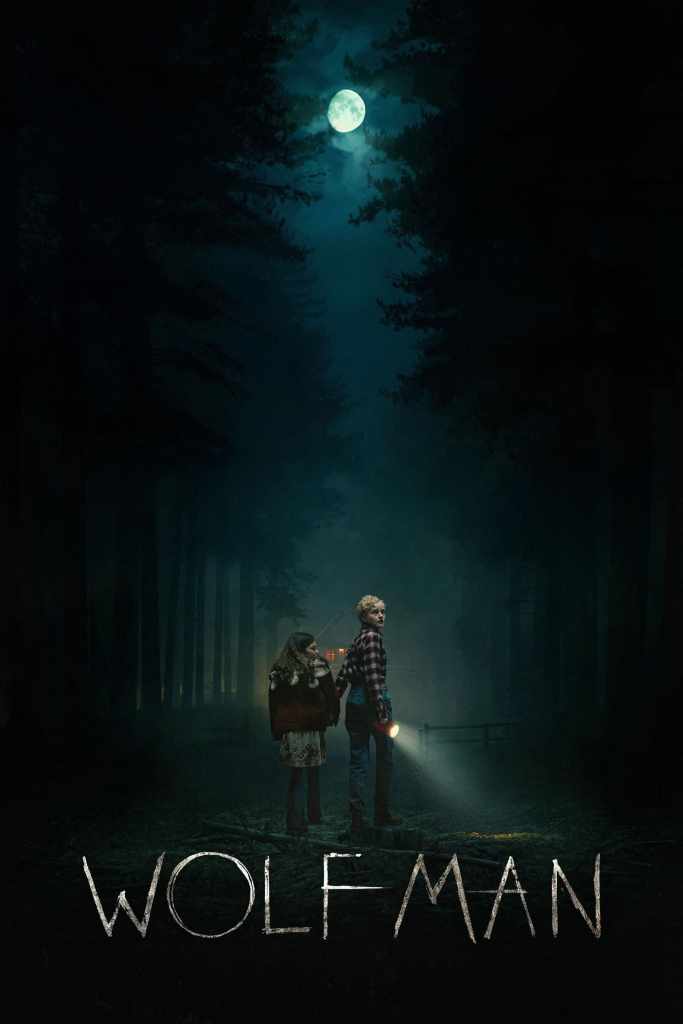
A secluded cabin, a full moon not required, and a man turning into a literal furball of daddy issues. That’s Wolf Man, Leigh Whannell‘s latest attempt to Frankenstein together the Universal Monsters franchise. It’s a film that’s equal parts horror, drama, and a masterclass in how not to sell a family vacation.
Christopher Abbott (It Comes at Night, Possessor, Sanctuary) plays Blake, a stay-at-home dad in New York City with a wife, Charlotte (Julia Garner: We Are What We Are, The Royal Hotel, Apartment 7A), who’s married to her job as a journalist, and a precocious daughter, Ginger (Matilda Firth: Starve Acre, Subservience). Their life is less “domestic bliss” and more “domestic disaster.” After receiving news that his estranged father’s remains are presumed buried in the Oregon woods, Blake ropes his reluctant family into visiting the remote homestead. “It’ll be good for us,” he says. Famous last words.
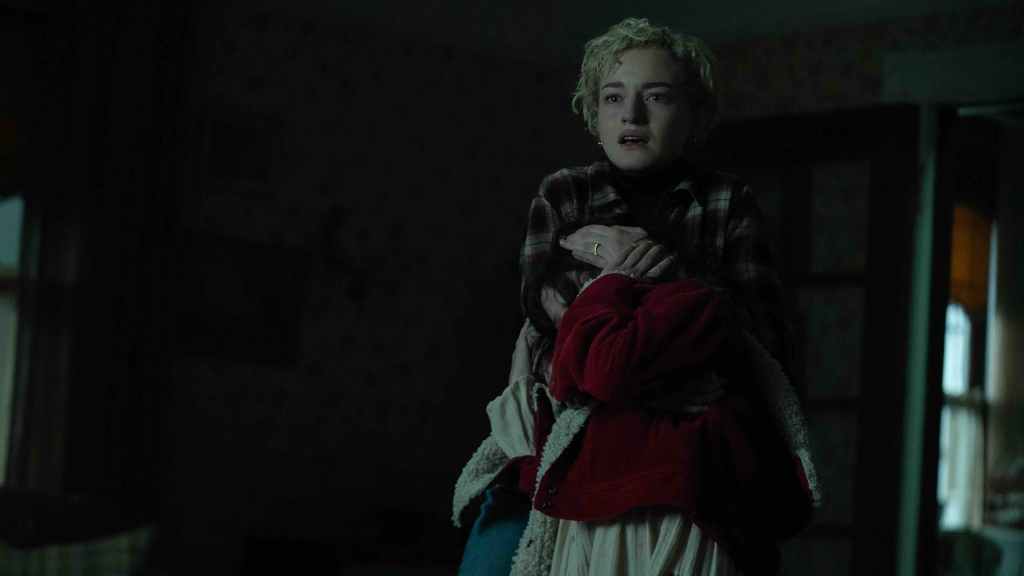
Of course, things go sideways… fast. Blake gets scratched by a shadowy beast—enter the titular Wolf Man—and begins a transformation that’s as much a body horror showcase as it is a metaphor for shitty parenting. Tensions escalate as Charlotte and Ginger struggle to survive both the creature outside and the one Blake’s becoming inside.
Whannell, the man who made gaslighting terrifying in 2020’s The Invisible Man and the underrated sci-fi thriller Upgrade, seems to have lost his thematic North Star here. Sure, there’s an attempt to tackle generational trauma and toxic masculinity, but it’s messy, loud, and occasionally impressive but mostly painful. The script, co-written by Whannell and Corbett Tuck, leans hard into metaphors about fatherhood, only to backpedal like a werewolf afraid of its own shadow.
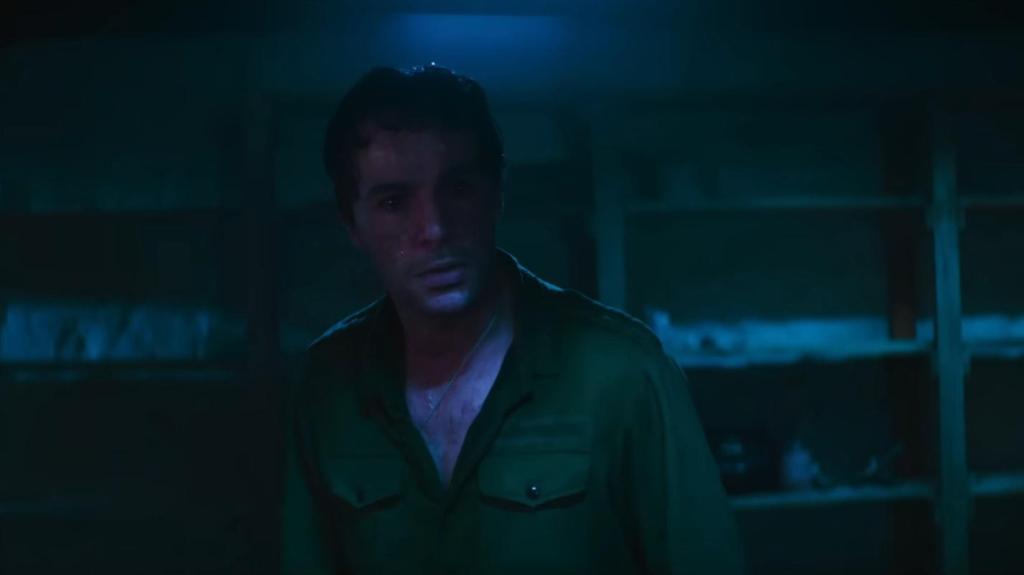
Wolf Man wears its metaphors on its sleeve. Blake’s lycanthropy symbolizes his inherited aggression and his fear of becoming the kind of father he’s always loathed. Admirable? Yes. Subtle? Not even close. The dialogue doesn’t trust the audience to “get it,” so it crams Big Ideas into clunky lines like, “Sometimes, when you’re a daddy, you’re so scared of your kids getting scars, you become the thing that scars them.” Thanks, Whannell. Could’ve figured that out without the help.
Christopher Abbott’s transformation—both emotional and physical—is the film’s saving grace. His descent from loving dad to feral beast is genuinely gripping, though the script gives him little beyond grunts and growls to work with in the second half. Julia Garner, criminally underutilized, does her best as Charlotte, shifting between career-driven badass and panicked mom. Matilda Firth’s Ginger is your standard horror movie kid: adorable until she starts asking dumb questions like, “What’s happening to Daddy?” Honey, he’s turning into a monster; read the room. Unfortunately, there’s just not a lot of genuine chemistry on the screen between the characters.
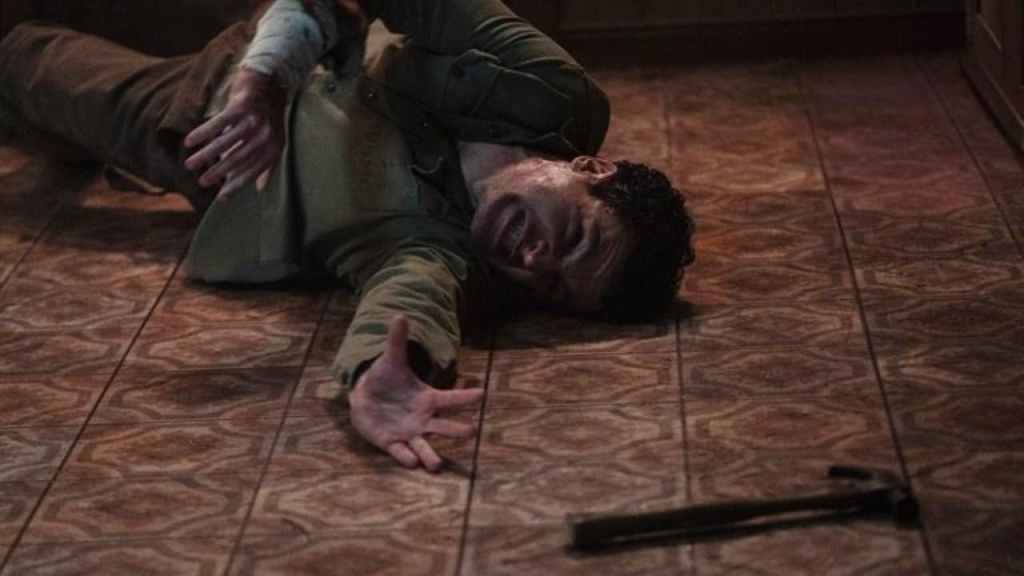
Sam Jaeger’s role as Blake’s survivalist father in the prologue is a textbook example of toxic masculinity wrapped in flannel. He’s intense, domineering, and just unhinged enough to make you wonder if the real monster is him.
Stefan Duscio’s cinematography captures the eerie beauty of rural Oregon, or at least New Zealand pretending to be Oregon. The misty woods and dimly lit interiors evoke a palpable sense of dread. Unfortunately, this “artistic gloom” backfires in the climactic scenes, where the action is a bit too dark and chaotic. If you’re watching this in a poorly calibrated theater, good luck figuring out who’s biting who.
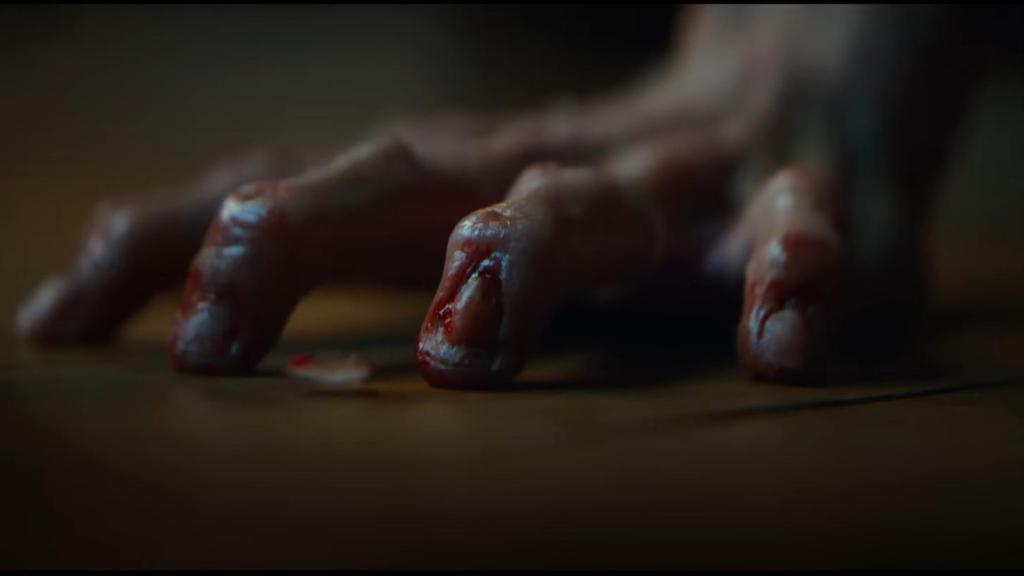
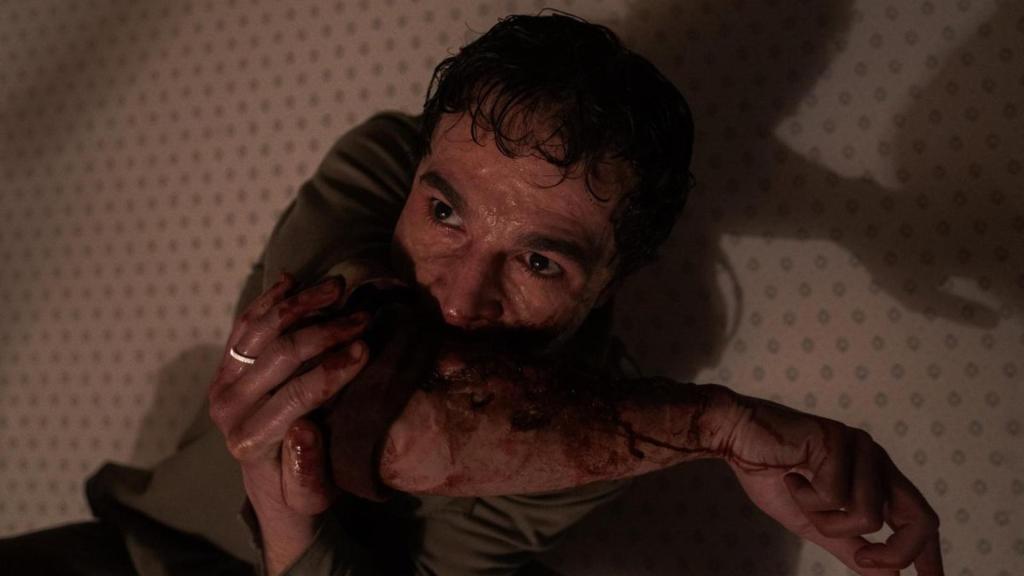
The body horror is decent, with Blake’s transformation offering some gnarly moments—teeth falling out (always makes me cringe), nails detaching, skin turning into something a dermatologist’s nightmares are made of. But the final Wolf Man design? Yikes. Part Bigfoot, part burn victim, and wholly disappointing. Way too fleshy, and not enough hair. The werewolf look is not what needed to be reinvented here.
Additionally, Wolf Man suffers from tonal whiplash. On one hand, it’s a tense creature feature with moments of genuine suspense. On the other, it’s a half-baked family drama. The script’s reliance on exposition and predictable twists (looking at you, “surprise” werewolf-on-werewolf battle) undermines its potential.
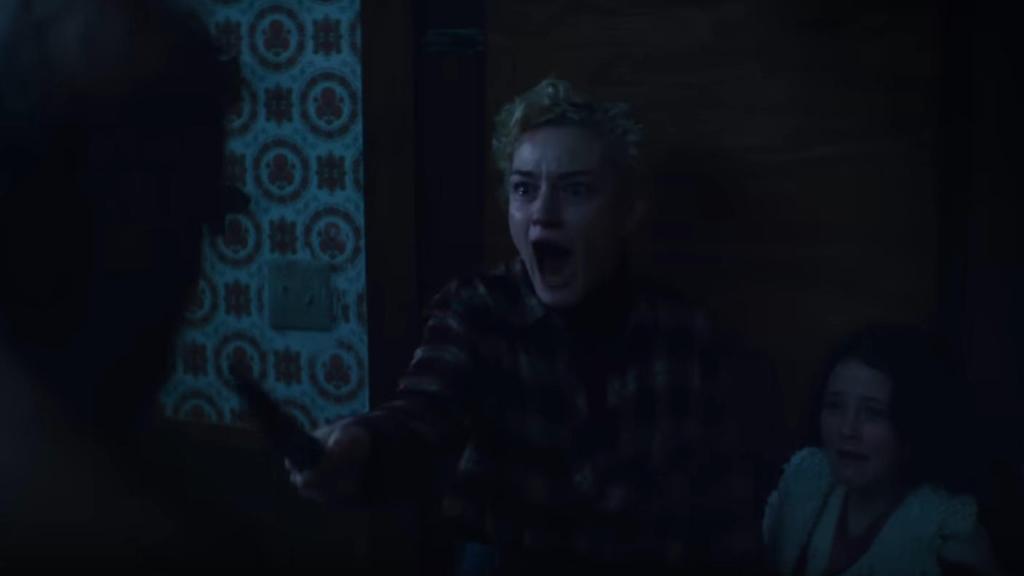
Despite its flaws, Wolf Man has its moments. Whannell’s talent for building tension is evident in scenes like the family’s escape to the farmhouse and the eerie “wolf vision” sequences. The sound design—every growl, snap, and rustle—is unsettling enough to make you double-check your locks at night.
But where The Invisible Man thrived on psychological horror, Wolf Man stumbles by leaning too heavily on its thematic ambitions. The family dynamics, while interesting, never fully develop, leaving the emotional core as hollow as the cabin Blake’s family hides in. The monster, both literally and figuratively, needed more bite—be it scarier design, deeper character exploration, or simply more time on screen.
Wolf Man is a middling entry in the Universal Monsters canon. It’s ambitious but uneven, atmospheric but murky, thoughtful but heavy-handed. Whannell’s direction shows flashes of brilliance, but the film’s inability to commit to either horror or drama leaves it in an awkward middle ground.
Should you see it? If you’re a die-hard fan of werewolf lore or Leigh Whannell’s work, sure. But temper your expectations—this isn’t The Invisible Man.

Our Rating
Director: Leigh Whannell
Writer: Leigh Whannell, Corbett Tuck
Distributor: Universal Pictures
Released: January 17, 2025

Kill Count = 3
Werewolf #1 kills the rando local creeper.
Werewolf Blake rips into the jugular of werewolf #1.
Werewolf Blake gets a bullet through the heart.
 The Blog Without a Face
Leave a comment