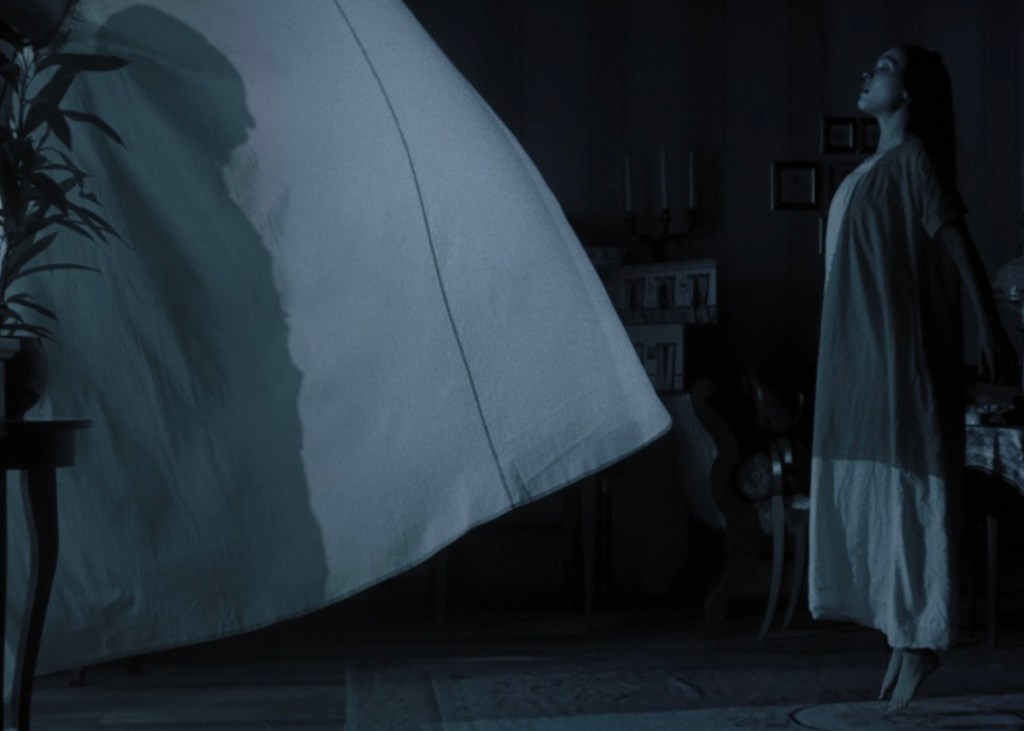

Ah, Nosferatu. The granddaddy of all vampire flicks. First, we had F.W. Murnau’s original silent masterpiece from 1922, which is the cinematic equivalent of a stiff corpse that refuses to stay buried. Then, Werner Herzog gave us a bizarro Klaus Kinski remake in 1979, proving that even bloodsuckers can get artsy existential crises. And now, Robert Eggers—the broody history nerd who behind classics The Witch (2015), The Lighthouse (2019), and The Northman (2022)—decided to throw his wide-brim hat into the ring. So, how does his version of Nosferatu, starring Bill Skarsgård and Lily-Rose Depp, stack up? We’ll get into it, but let’s take a stab at the film’s legacy.
F.W. Murnau’s 1922 original, stands as a seminal work in the history of cinema, particularly within the horror genre, dripping with occult influences and enough spooky vibes to make your average goth swoon. As an unauthorized adaptation of Bram Stoker‘s “Dracula,” the film introduced many viewers to the eerie and captivating world to the creepy Count Orlok, but also redefined what horror could look like on screen. Take that, copyright lawyers.
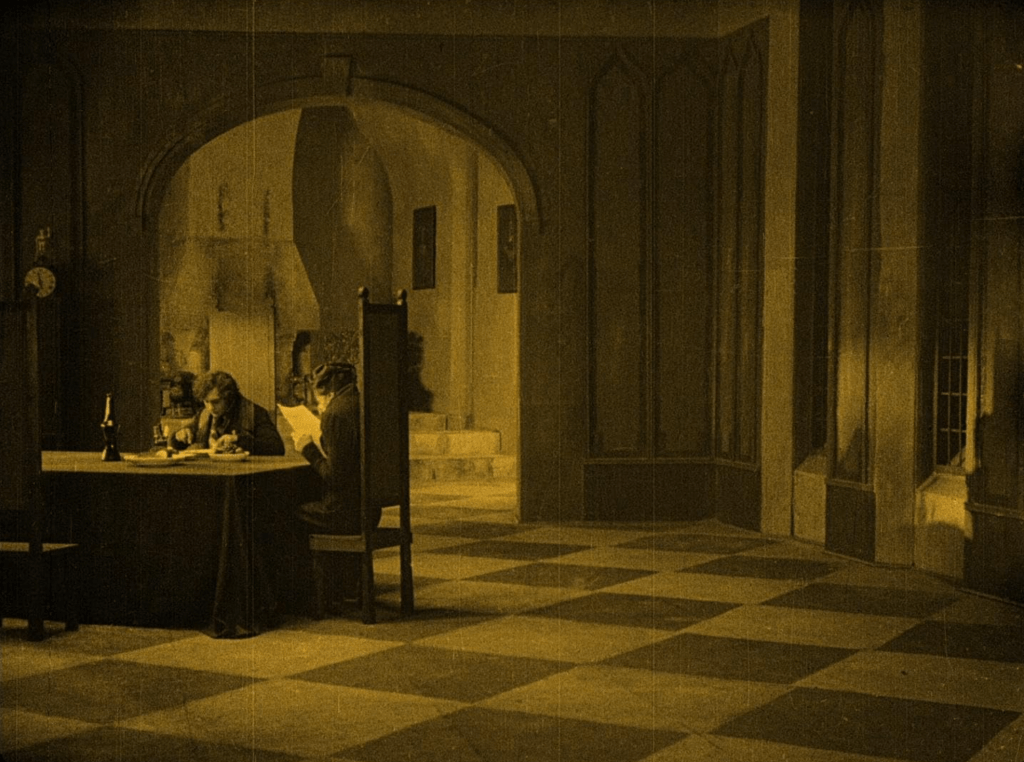
Set against the backdrop of the Weimar Republic, a time when Germany was basically one bad day away from total existential collapse, Murnau’s Nosferatu reflects a nation haunted by the scars of World War I. Political instability? Check. Cultural renaissance? Double check. This chaotic cocktail brewed the perfect storm for German Expressionism—a n avant-garde movement characterized by distorted sets, dramatic lighting, and themes of madness and alienation. Murnau was clearly sipping this artistic Kool-Aid, creating a world where the characters’ psychological turmoil oozes out of the distorted sets like black ink on a therapist’s Rorschach test.
Of course, Nosferatu isn’t just Dracula with the names swapped out to dodge lawsuits. Okay, fine, it kind of is. Jonathan Harker becomes Thomas Hutter, Mina transforms into Ellen, and Count Dracula gets a full horror makeover as Count Orlok—basically Nosferatu’s answer to “What if a rat could walk on two legs?” With elongated fingers, a bald head, and teeth so bad even a Victorian dentist would cry, Orlok embodies the fears of disease and decay that plagued postwar Europe. Murnau’s choice to make his vampire a grotesque monstrosity rather than a suave nobleman adds an extra layer of nightmare fuel. Changes made to the classic Dracula narrative to involve Germany allowed Murnau and screenwriter Henrik Galeen to infuse the story with distinct Germanic folklore and occult themes.

Now, let’s talk about the film’s dive into occult territory. Early 20th-century Europe was neck-deep in the Occult Revival, where everyone from mystics to middle-class moms decided they were into alchemy and tarot cards. Nosferatu leans into this esoteric zeitgeist, filling its frames with astrological and alchemical symbolism. For instance, the appearance of a black cat, a traditional symbol of witchcraft and bad omens, enhances the film’s eerie atmosphere. Additionally, the moon’s phases play a significant role in the narrative, aligning with astrological beliefs about lunar influence on human behavior and supernatural events. The film’s title card even features an alchemical symbol, suggesting a connection between Count Orlok’s vampirism and the ancient quest for immortality. It’s a full-on occult aesthetic flex.
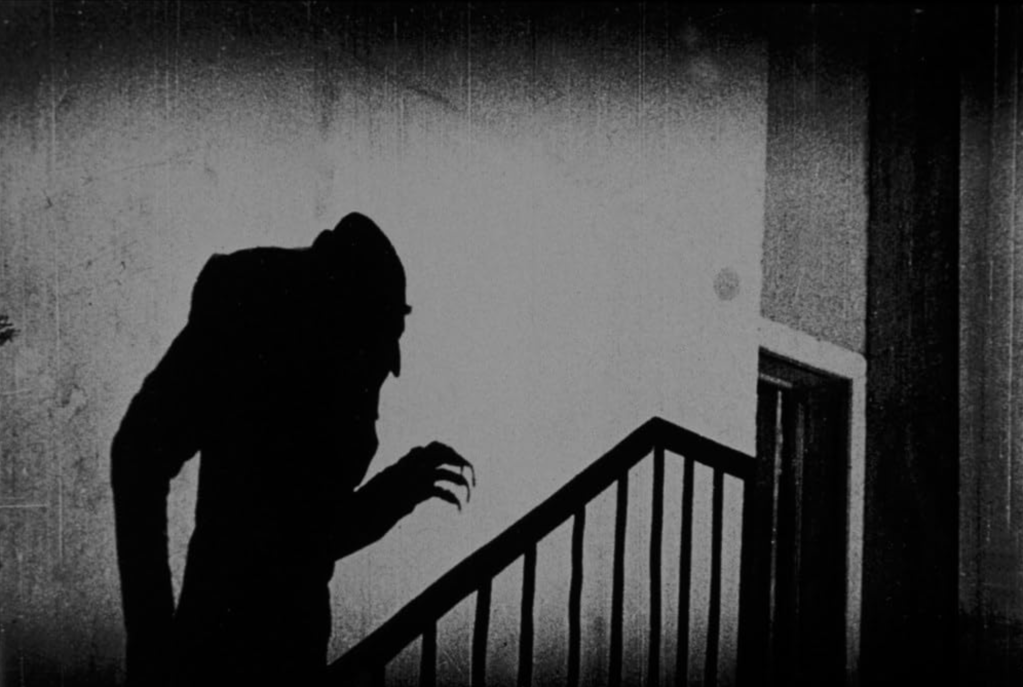
The vampire lore in Nosferatu has deep roots in Eastern European folklore, with tales of bloodsucking creatures dating back centuries. Back in the day, vampires weren’t sexy—they were disease-carrying harbingers of death, embodying societal fears of the unknown. Orlok embodies this ancient dread with visuals including elongated fingers, a bald head, rat-like teeth, and complete with a plague ship full of rats. His inhuman movements, thanks to Murnau’s stop-motion effects, make him less “creepy dude” and more “walking contagion.”
Speaking of visuals, Murnau’s use of chiaroscuro lighting and distorted sets practically defined German Expressionism. Shadows creep and crawl like they’re alive, and Orlok’s silhouette is more iconic than the Mona Lisa. The film’s aesthetic is both a reflection of its time and a harbinger of the horror tropes to come. Let’s not forget the innovative special effects—fast-motion sequences and stop-motion animation that make Orlok’s movements feel jarringly unnatural. It’s like watching a nightmare unfold in real time.
So, while Robert Eggers may have brought his own broody spin to Nosferatu, let’s not forget where it all started. Murnau’s influence echoes through the decades, shaping how we see vampires as more than just caped creepers. The film’s emphasis on atmosphere and psychological horror set the standard for the genre, proving you don’t need jump scares when you have existential dread.
Now let’s dig into Egger’s latest remake. Thomas Hutter (Nicholas Hoult – Renfield, The Menu, Mad Max: Fury Road) heads to Transylvania on some suspicious real estate business for Count Orlok (Bill Skarsgård – Boy Kills World, Barbarian, It). Orlok isn’t just a creepy landlord; as we’ve discussed, he’s a vampire. Meanwhile, back in Wisborg, Hutter’s wife Ellen (Lily-Rose Depp) is busy having gothic night sweats and psychic bad vibes. When Orlok moves to town (via plague ship, no less), Ellen realizes the only way to stop him is to offer herself as bait.

Let’s get one thing straight: Robert Eggers doesn’t half-ass anything. He’s all about historical accuracy and moody atmospheres. Watching Nosferatu is like stepping into a grimy 19th-century oil painting, complete with rats, fog, and corset-induced heaving. Clutch those pearls, Jane Austen! But while the visuals are jaw-dropping and I particularly appreciate his showing the nastier, grotesque sides of “medicine” of the time including “hysteria medicine” and Ellen getting strapped to a bed.
Bill Skarsgård’s Count Orlok is a thing of nightmares. Imagine he fell into a vat of rotting corpse makeup and decided to whisper Romanian sweet nothings into your ear. That’s the vibe. Skarsgård is grotesque in the best way possible, lurking in the shadows like a particularly menacing mildew stain. His voice is a guttural growl—the kind of sound you’d imagine Satan’s voicemail greeting would be. But here’s the kicker: Eggers keeps him in the shadows for so long that by the time Orlok really starts doing his thing, you’re almost mad it took 40 minutes to get there.
Depp’s Ellen is… something else. She spends most of the movie writhing, moaning, and looking like she’s either possessed or auditioning for a really intense Pilates class. Depp does her best to channel Isabelle Adjani’s unhinged performance from Possession, but it doesn’t always land. Sure, she’s compelling when she’s sobbing and contorting her body like a human pretzel, but the script doesn’t give her much to do besides scream and sacrifice herself. While I applaud her performance overall, I couldn’t help but tire of the frequency of her “fits”. Ultimately, I think she deserved a bit better.
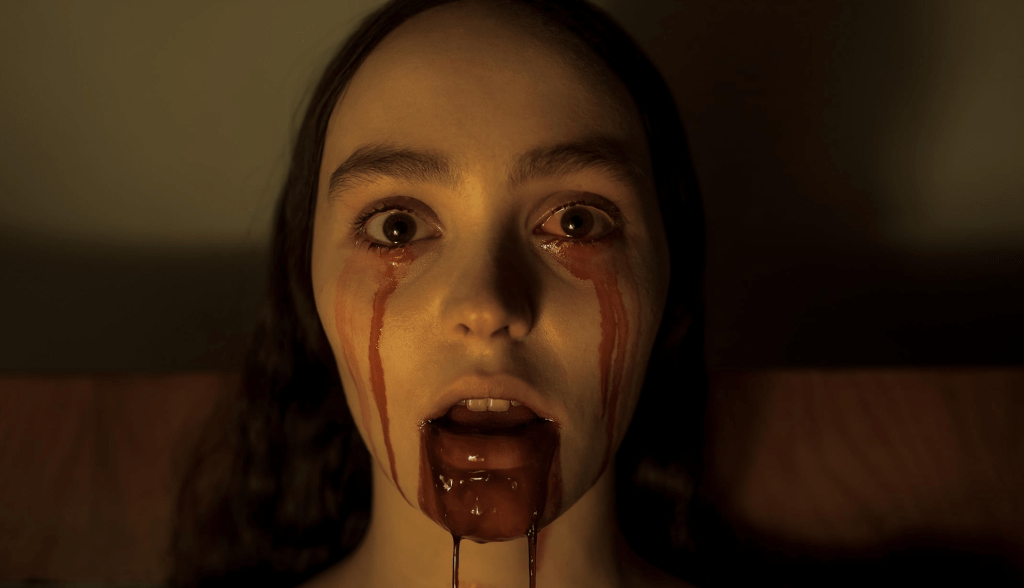
Jarin Blaschke’s cinematography is, as expected, stunning. Shadows creep across the screen like sentient entities, and every frame looks like it was ripped from a German Expressionist fever dream. There’s a lot of play with light and dark, but occasionally it’s too dark—as in, “Wait, am I watching a vampire movie or a black screen?” dark. Eggers loves his gloom.
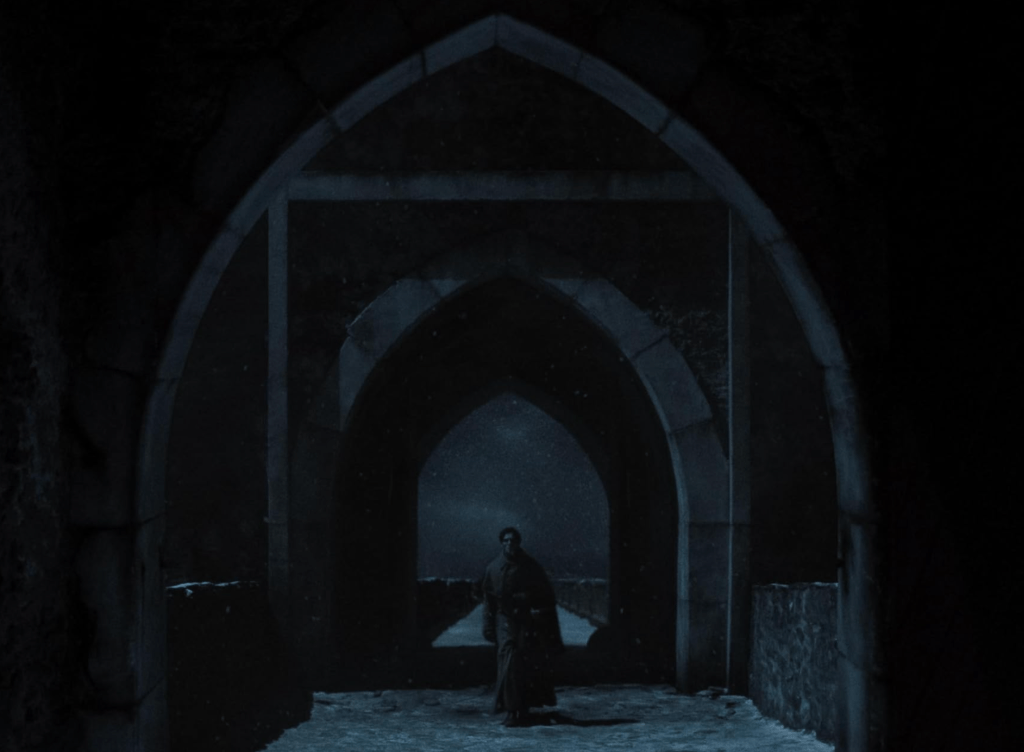
Much like the original film, Orlok appears to partly symbolize pestilence with his decaying body and his arrival on a plague ship full of rats. However, in addition, Eggers leans hard into the idea of Orlok as a metaphor for sexual repression and shame. Ellen’s “relationship” with Orlok is framed as a horrifying manifestation of her deepest, darkest desires. It’s disturbing, sure, but also a little heavy-handed. By the time Ellen starts whispering about how Orlok embodies her “shame,” you half-expect Freud to pop up and start analyzing her.
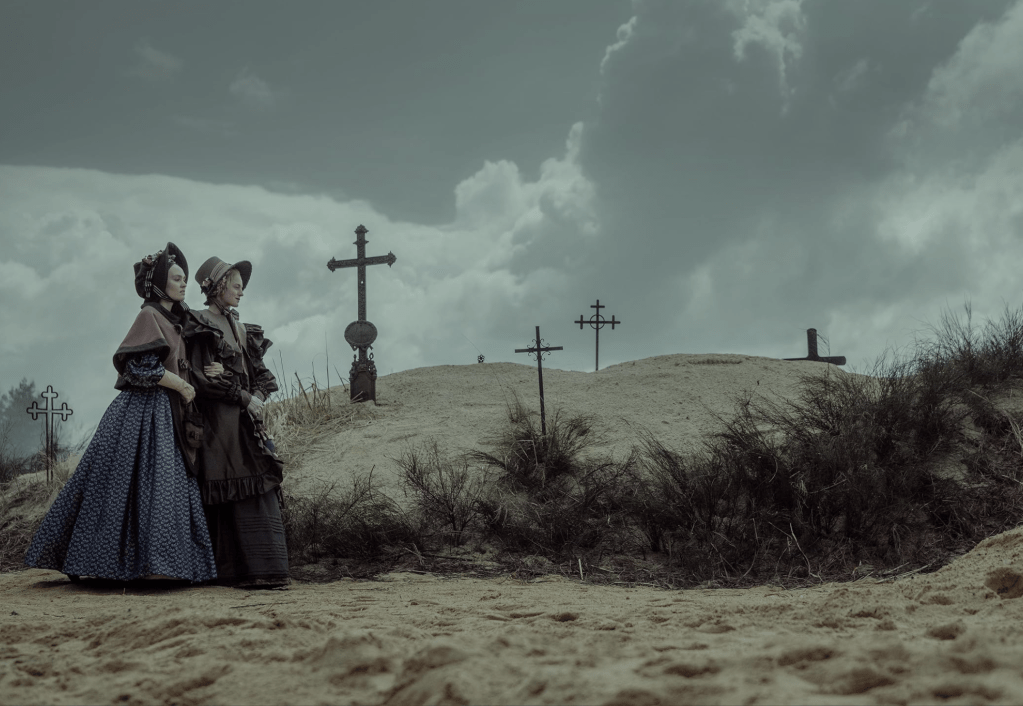
The dialogue in Nosferatu is appropriately archaic but sometimes veers into melodrama territory. Characters spend a lot of time declaring things like “The darkness is here!” and “Evil walks among us!” It’s not bad, per se, but it does feel like everyone’s trying a little too hard to sound spooky. Also, shoutout to Willem Dafoe as Professor Von Franz, the world’s most eccentric vampire hunter. He steals every scene he’s in with his bonkers energy and cryptic mutterings.

So, how does Eggers’ Nosferatu stack up against its predecessors? Let’s break it down:
- Murnau (1922): The OG. Silent, eerie, and groundbreaking for its time. Murnau’s Orlok (played by Max Schreck) is a scrawny, Nosferatu-looking weirdo who’s more rodent than man.
- Herzog (1979): Kinski’s Orlok is tragic and grotesque, embodying the weight of immortality in a way that’s equal parts pitiful and horrifying. Plus, Herzog’s version has that infamous droning score that’ll make you want to crawl out of your own skin.
- Eggers (2024): Eggers combines the gothic horror of Murnau with Herzog’s existential dread but adds his own flair for historical detail and psychological depth. It’s less raw than its predecessors, but it’s certainly more polished.
The film immerses viewers in a plague-ridden nightmare world with stunning visuals that are both haunting and evocative. Skarsgård delivers a terrifyingly magnetic performance as Orlok, capturing the character’s eerie allure with chilling precision. Robert Eggers’ dedication to historical accuracy and atmospheric detail is evident in every frame, creating an unsettling yet captivating environment. Willem Dafoe, as expected, channels a near-supernatural energy that makes you wonder if he’s already halfway to being a vampire in real life.
However, the film isn’t perfect. Personally, it is very difficult to bore me, but I can certainly imagine others having difficulty with the glacial pacing, dragging the story out to the point where it feels like forever before anything significant happens. Further, digging below the surface of Depp’s excellent performance, Ellen’s character is disappointingly underdeveloped, reduced to a scream queen with little agency, which feels like a missed opportunity. The heavy-handed symbolism often feels overwhelming, as though the film is determined to club you over the head with its gothic candelabra.

Eggers’ Nosferatu is like a gothic opera: visually stunning, deeply unsettling, and occasionally ridiculous. It’s a love letter to the horror classics that came before it, but it’s also weighed down by its own sense of self-importance. Is it scary? Absolutely. Is it perfect? Nah. But for all its flaws, it’s still a must-watch for horror fans and cinephiles alike.


Our Rating
Director: Robert Eggers
Writer: Robert Eggers
Distributor: Focus
Released: December 25, 2024

Kill Count = 8
Knock rips into the neck of a prison guard.
Anna, Clara, and Louise Harding are all sucked dry by Count Orlock.
Friedrich Harding succumbs to the plague.
Thomas impales Knock in Orlock’s grave.
Ellen gets sucked by Count Orlock.
Count Orlock is killed by the rising sun.

Best Scare
There are plenty of effective jump scares in this one. However, I’m giving this to the scene involving Count Orlock killing the little Harding girls. With the moonshine backdrop and him unceremoniously dropping their bodies, it was absolutely brutal and chilling.

 The Blog Without a Face
Leave a comment