


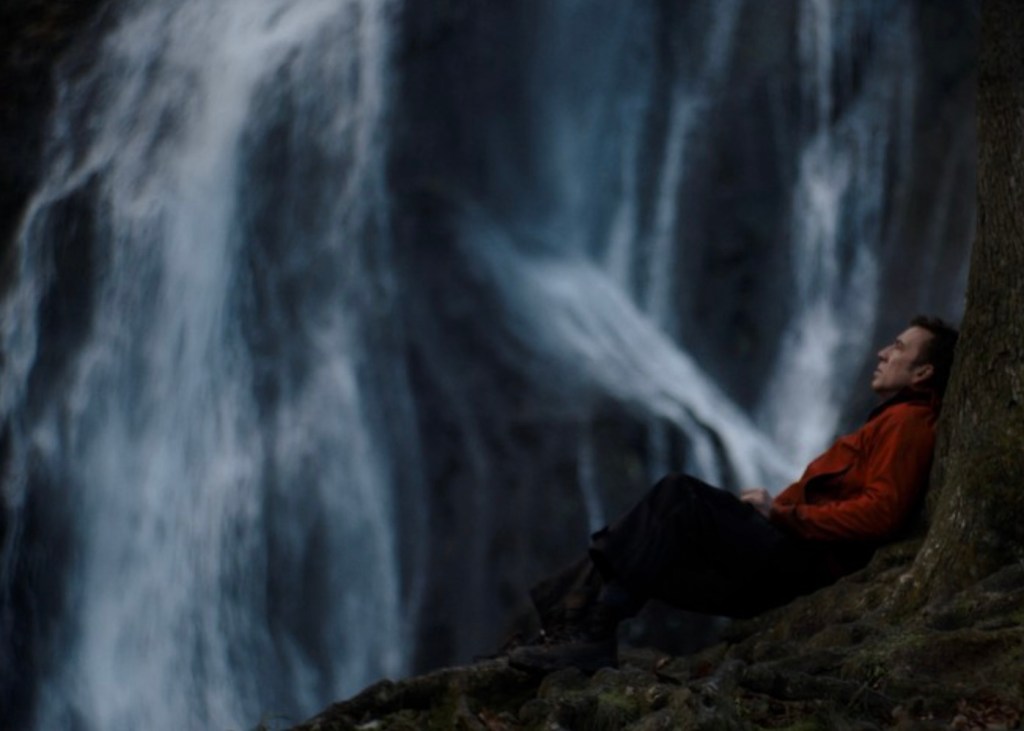
Arcadian, directed by Benjamin Brewer, is a stark portrayal of a post-apocalyptic world where survival is not guaranteed, and the night brings horrors that are both unseen and relentless. This setting is the battleground for a father, Paul, played by Nicolas Cage, and his twin sons, Joseph and Thomas, portrayed by Jaeden Martell (It, Midnight Special, Knives Out) and Maxwell Jenkins (Lost in Space), respectively. They navigate the treacherous landscapes and the threats that emerge as darkness falls, striving to uphold a semblance of family and normalcy against a backdrop of chaos.
Nicolas Cage, known for his eclectic and often explosive roles, adopts a more subdued demeanor in Arcadian, focusing on the paternal and protective aspects of his character. This restraint allows the emotional struggles of his sons, played by Martell and Jenkins, to come to the forefront, showcasing their evolution from boys to young men in a world that affords little room for innocence.

Jaeden Martell’s Joseph is introspective and cautious, embodying the brains of the operation. He portrays of a young genius trying to make sense of their broken world as he navigates the line between childhood and the responsibilities that his dire circumstances thrust upon him. Maxwell Jenkins’ Thomas provides the counterbalance as the more impulsive and physically active of the twins. His character’s actions often drive the plot forward, reflecting the restless energy of youth and the desire to rebel against imposed constraints, even when every night is a fight for survival.
The dynamic between the brothers offers exploration of familial bonds in extreme situations, where the tension and affection between them resonate with the universal themes of rivalry, loyalty, and love.
The creature design in Arcadian is a critical element that, in my opinion, elevates the film. The monsters are a blend of nightmarish features that tap into primal fears: they are vaguely humanoid yet grotesquely altered, suggesting a corruption of the natural order. Their design incorporates elongated limbs, sharp claws, and unsettling movements that are both erratic and eerily deliberate, making them formidable antagonists that are hard to predict.
The visual effects team, possibly working with constraints typical of the genre, uses shadows and quick, jarring movements to their advantage, making the creatures feel more invasive and terrifying. This not only maximizes their impact on the audience but also cleverly masks any limitations of the budget, ensuring that the monsters remain both a visible and psychological threat throughout the film.
The themes of Arcadian are reflective of many post-apocalyptic narratives, focusing on survival, the collapse of civilization, and the resilience of the human spirit. However, it delves deeper into the psychological impact of such a world on family dynamics and the development of youth. The film explores how trust and relationships are built and strained when every night could be your last.
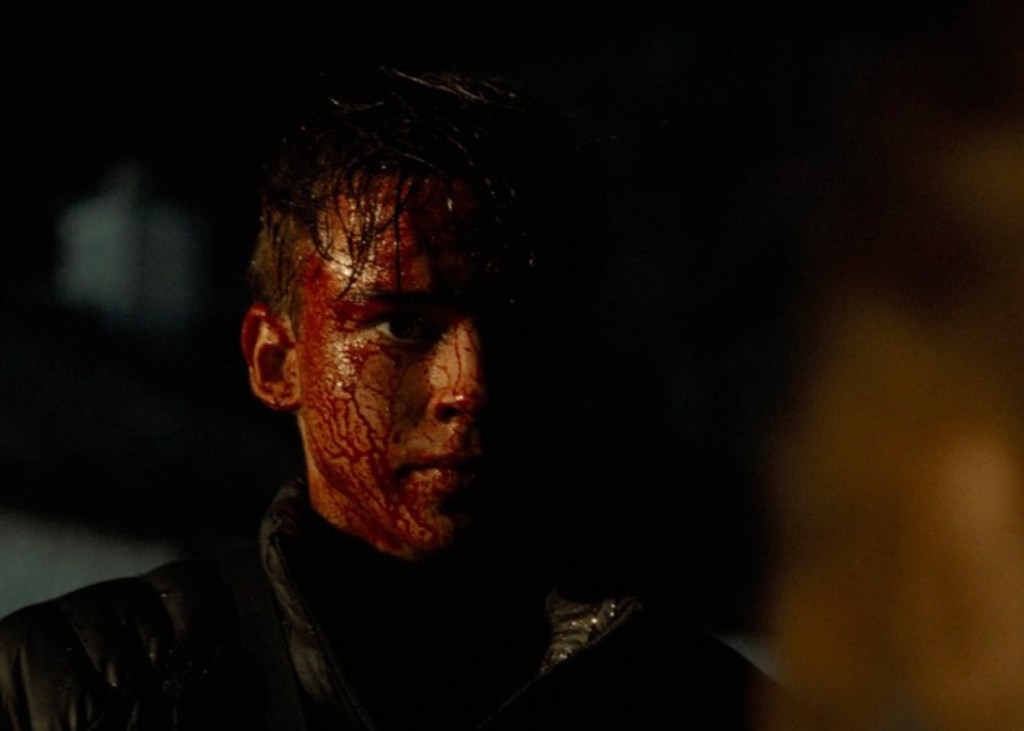
Environmental overtones are also evident, with the creatures possibly symbolizing the consequences of human exploitation and environmental degradation. This adds a layer of ecological commentary to the story, suggesting that the horrors they face might be self-inflicted wounds—a planet fighting back against its destroyers.
The title Arcadian refers to an ideal of pastoral beauty and harmony with nature, often associated with a utopian existence. This is deeply ironic given the film’s harsh, survivalist setting, where nature has become an adversary, and any notion of harmony is brutally subverted. The use of “Arcadian” might hint at the lost world that existed before, or it might serve as a bitter contrast to the current state of the world within the film. This juxtaposition amplifies the tragedy of the setting—a paradise lost to fear, where the characters are in constant conflict with the twisted remnants of their environment. Although, calling the pre-existing world (presumably one not unlike our own) a paradise is a bit of a stretch.
The film’s strengths lie in its character-driven narrative, bolstered by solid performances and innovative creature design that keeps the tension high and the stakes personal. It is a thoughtful addition to the genre, offering a poignant look at what it means to maintain one’s humanity in the face of monstrous adversity.

Ultimately, however, while certainly worth watching, Arcadian doesn’t entirely stand out in the crowded field of post-apocalyptic dramas. By focusing on the intimate scale of a family’s struggle rather than the broader details of the catastrophe that befell humanity, I found the lack of answers a bit frustrating. The family drama and human interactions were not sufficiently compelling to detract from/justify the lack of world building.
There are a handful of additional issues I had. For example, despite the quality performances, there is a noted lack of depth in the characters’ backstories and motivations beyond the relatively superficial archetypes the characters represent. Nicolas Cage’s character, despite being a central figure, is very underutilized, with more focus placed on the younger actors. I feel conflicted about the cinematography and visuals in general. There are some incredibly beautiful shots. However, the use of “shaky cam” and underlit scenes are somewhat frustrating. These choices are intended to add a layer of realism and urgency but instead often result in visual confusion, making it difficult to follow action sequences and crucial moments. Nonetheless, I felt that this also provided a level of obscuration of the creatures that was probably necessary to maintain credulity. Taken together, the movie falters in delivering a compelling narrative drive, relying too heavily on genre clichés without introducing enough innovative elements to stand out.
While Arcadian has elements of interest, particularly in its conceptual promise and some visual aspects, it struggles with execution in terms of character development, pacing, and coherent storytelling.


Director: Benjamin Brewer
Writer: Mike Nilon
Released April 12, 2024
 The Blog Without a Face
Leave a comment