


Beth Hetland is an adjunct professor at the School of the Art Institute of Chicago (SAIC) where she teaches comics and related courses. She has a rich academic background with a Master of Fine Arts from The Center for Cartoon Studies obtained in 2011 and a Bachelor of Fine Arts from SAIC achieved in 2009. In addition to her teaching, Hetland is an active member of the comics community, engaging in both solo and collaborative projects, with a particular fondness for paper craft, narrative structures, and the comics medium.
Hetland’s career is marked by an evolutionary approach to comics and teaching. She transitioned from being a student to an educator in the field, contributing to the curriculum with fresh perspectives and innovative classes. This transition was influenced by her time at The Center for Cartoon Studies and her academic journey, which was characterized by a rapid pace of learning and creating. Despite initially adopting a ‘charging through’ approach due to the quick succession from undergraduate to graduate studies, she later embraced a more meditative, thoughtful process in her work and teaching, valuing the feedback and critiques that have helped refine her approach.
Beth Hetland’s engagement with comics extends beyond teaching; she actively participates in the creation of zines and comics, marking a significant presence in the comics festival circuit. Her work in the field, along with her teaching, has earned her several accolades, including a DCASE Grant from the City of Chicago in 2022. Tender, her latest graphic novel, showcases her talent and offers a deep dive into themes of body, identity, and societal pressures, inspired by her own reflections and the dialogues surrounding womanhood, body autonomy, and societal expectations.
The production of Tender marks Hetland’s first major publication with a comics publisher, showcasing her growth as an artist and storyteller. Her teaching career at SAIC also significantly influenced her artistic approach, particularly her transition to digital art, which was inspired by her students’ methodologies.
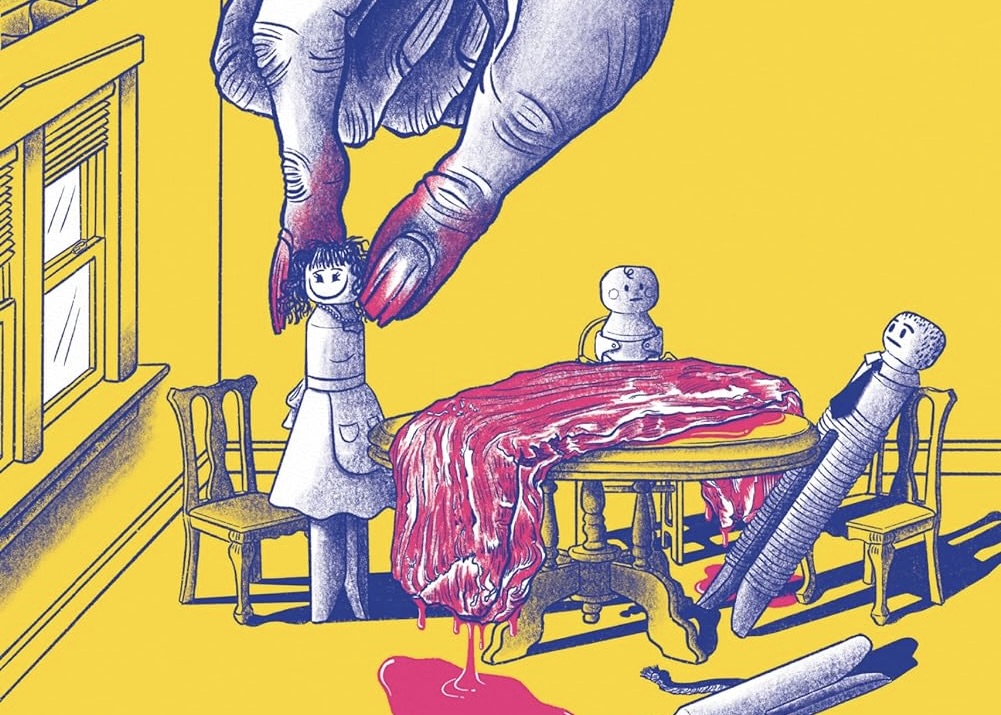
The graphic novel is an intricate tapestry of psychological horror woven with threads of body horror, presenting a fresh perspective in a genre traditionally dominated by male creators. The narrative delves into the life of Carolanne, a character emblematic of the societal pressures faced by many women: the pursuit of perfection in personal and professional life, and the resulting psychological turmoil. Hetland’s motivation for the book stemmed from her own experiences and anxieties regarding body image and societal expectations, particularly the pressures surrounding the idea of starting a family. The narrative is deeply personal, exploring what it means to have control over one’s body and the terrifying prospect of losing that control.

The artwork, while simple, has a profound ability to convey depth. It plays a significant role in storytelling, particularly through its use of color and panel construction to mirror Carolanne’s internal struggle and societal pressures. Scenes filled with mundane daily activities contrast sharply with nightmarish sequences, symbolizing the protagonist’s deteriorating mental state and control over her life.
Hetland’s narrative is a brutal critique of gender roles, social media, cultural pressures, and the inherent expectations placed upon women, making ‘Tender’ a resonant story for the modern era. It avoids clichés of body horror, instead offering a unique exploration of self-destruction and control, culminating in a compelling yet disturbing read.
The graphic novel’s pacing is meticulously crafted, leading the reader through Carolanne’s seemingly ordinary life into the depths of horror, with a transition so subtle yet gripping, it’s likened to being pulled by an undertow of social pressure and platitudes. The horror elements, while graphic, serve as metaphors for deeper issues, making ‘Tender’ a poignant commentary on loneliness, codependency, and the dark side of societal expectations.
Overall, ‘Tender’ is not just a horror story but a mirror reflecting the grotesque extremes to which societal pressures can push individuals. It’s a compelling read for those interested in horror that resonates on a psychological level, providing a narrative that’s as thoughtful as it is unsettling. It comes highly recommended!


Fantagraphics
Published March 12, 2024
 The Blog Without a Face
Leave a comment