

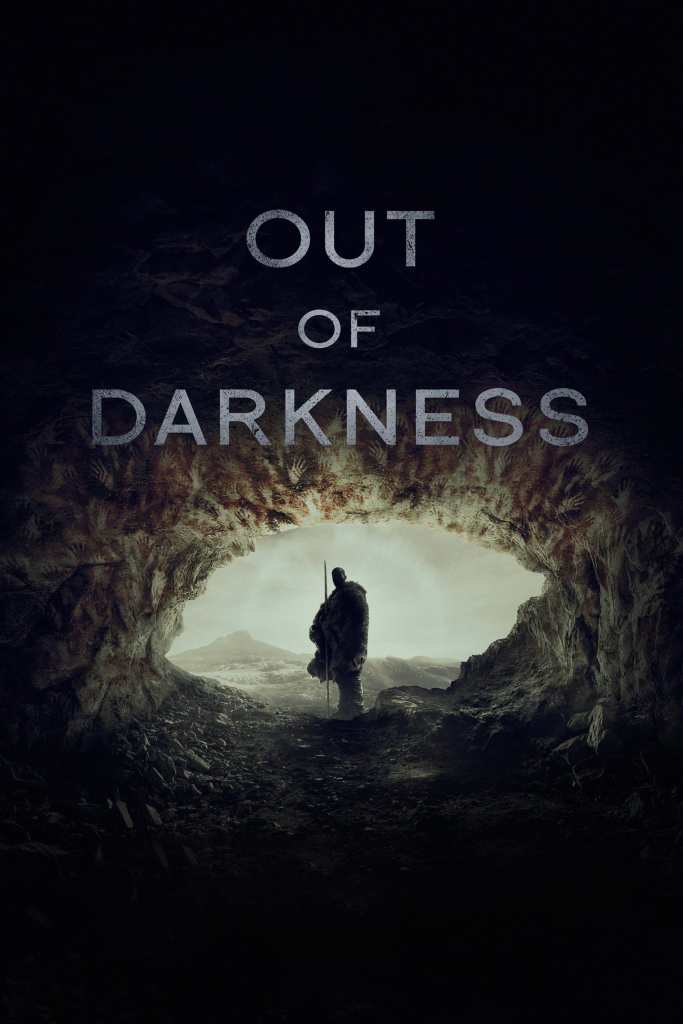
Out of Darkness, helmed by the audacious Andrew Cumming, crashes into the cinematic scene like a woolly mammoth at a vegan dinner party. The film is shot in the Scottish Highlands, setting an appropriately bleak scene 45,000 years ago. We follow a pack of early humans led by Adem, played by Chuku Modu, his pregnant wife, Ave (Iola Evans), his younger brother Geirr (Kit Young), his son Heron (Luna Mwezi), Odal (Arno Lüning) his advisor, and “a stray” named Beyah (Safia Oakley-Green). The group confronts the primal fears of the unknown, underscored by an ever-present, lurking terror.
“The danger of bringing light to a dark place is that you might find out what lives in the darkness.”
– Odal
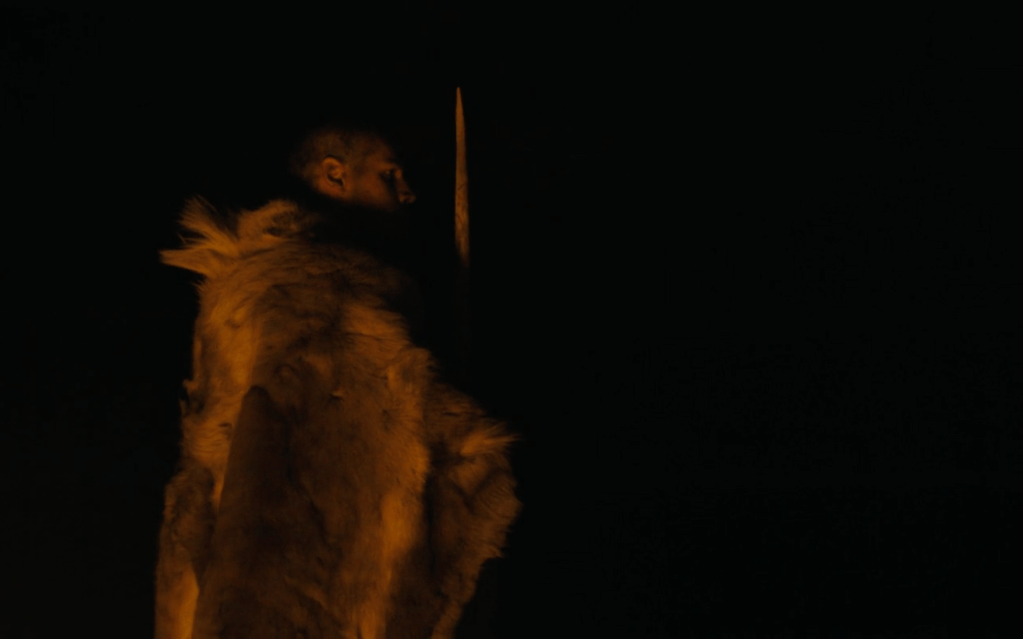
The film takes a wild leap into the prehistoric avant-garde by inventing its own language, Tola. I really appreciate this as it adds to the immersive experience. The bold creative choice of an invented language, complemented by meticulous period research, not only sets Out of Darkness apart but also enhances the storytelling, providing depth and authenticity. Ben Fordesman, the cinematography wizard, must have pitched, “Why bother with special effects when Scottish weather is the original green screen?” The use of natural lighting and the atmospheric soundscape further accentuates the film’s raw, unfiltered essence. The landscape is both breathtaking and a stark reminder that nature is not your friend.
Deep within this cinematic cave painting is a story about human nature, as if survival wasn’t hard enough without having to ponder your average existential crises. Safia Oakley-Green’s Beyah shines as she evolves from the tribe’s outsider to their secret weapon, proving that even in prehistoric times, underestimating women was a bad idea.
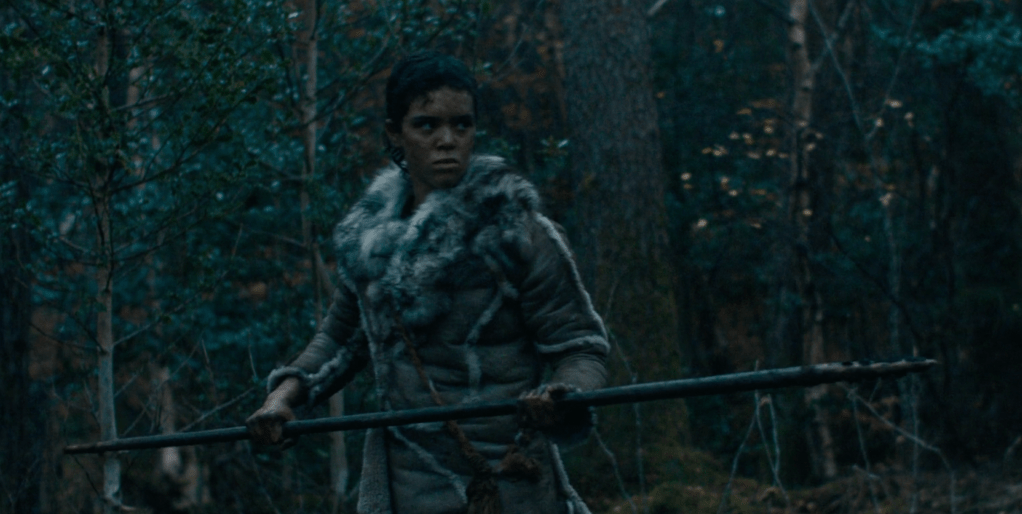
The film does not shy away from exploring the darker aspects of human nature. The dynamic within the group reflects the complexities of societal hierarchies and gender roles, themes as relevant today as they were in the past. The film’s conclusion, while open to interpretation, leaves a lasting impact, urging viewers to reflect on the origins of humanity’s deepest fears and the cyclical nature of history and human behavior. There are still certainly some plot holes along the way (check out the spoilery section below for more details).
Out of Darkness is a commendable debut from Cumming, blending historical fiction with psychological horror to create a film that is not only a visual spectacle but also a thought-provoking exploration of the human condition. It is a reminder of the stories lost to time and the unchanging essence of what it means to be human. This film is a must-watch for those who are fascinated by the mysteries of our past and the enduring spirit of survival that defines us. Definitely worth checking out. Spoilers ahead!


Director: Andrew Cumming
Writer: Ruth Greenberg, Andrew Cumming, Oliver Kassman
Released February 9, 2024 (U.S.A.)

When the creature is revealed to be Neanderthals adorned in a monstrous get-up I was simultaneously confused and thrilled. The confusion stemmed from some of what I would describe as plot holes. For example, what the hell was that tarry stuff the Homo sapiens found on Heron’s skins? How did the Neanderthals make those inhuman noises? How did they completely demolish the mammoth in a supposedly inhuman way as evidence by the mess of a carcass?
However, as an enthusiast of ancient history (nerd alert), I absolutely loved the idea. The interactions between various human species in prehistoric times, particularly between Homo sapiens and Neanderthals, have been a subject of significant scholarly interest and debate. The common thinking regarding these interactions has evolved over time, influenced by discoveries in archaeology, genetics, and paleoanthropology.
Modern humans, Homo sapiens, are thought to have originated in Africa around 200,000 to 150,000 years ago and later spread to other continents. During their migrations, Homo sapiens encountered Neanderthals, particularly in regions like the Middle East. Evidence from archaeological sites, such as Skhul and Qafzeh Caves in Israel, suggests that Homo sapiens and Neanderthals coexisted in the Middle East from about 120,000 to 55,000 years ago. The interactions between these species likely included cultural exchanges and occasional interbreeding, as modern non-African humans carry a small percentage of Neanderthal DNA.
In terms of survival strategies, Homo sapiens and Neanderthals had to adapt to their environments to secure food and resources. Neanderthals, having evolved in Eurasia, were adapted to cold climates and had a diet that likely included large mammals. Homo sapiens, on the other hand, showed more diverse dietary practices and technological innovations. In Eurasia, it’s hypothesized that peaceful behavior was more advantageous due to the abundance of edible insects, Homo sapiens might have adopted less aggressive behaviors compared to their African counterparts, who faced more predatory threats.
The arrival of Homo sapiens in regions inhabited by Neanderthals brought significant changes, as evidenced by the emergence of new tool technologies and cultural practices. The Middle Stone Age toolkits, for example, demonstrate a leap in technological advancements, allowing for more efficient hunting and gathering. These cultural and technological changes were not linear but varied across different regions and groups, suggesting independent developments or shared technologies between different human groups.
While Homo sapiens and Neanderthals coexisted for tens of thousands of years, Neanderthals eventually went extinct, and Homo sapiens became the dominant human species. Factors contributing to Neanderthal extinction could include competition with Homo sapiens, environmental changes, and perhaps differences in social and cognitive capabilities. The exact reasons remain a topic of research and debate.
This leads to another criticism I have for the film. Ultimately, the conclusion, whether intentional or not, seems to project a misanthropic message: Neanderthal=good, Homo sapiens=bad. It seems silly to depict the Neanderthals as completely innocent and purely reverent of life. They did steal Heron from the Homo sapiens and seemingly stalked the group. Personally, I feel it would have been more impactful to depict an aggressive back-and-forth conflict between the two species throughout the film with this interaction being rooted in fear and superstition on both sides. The reality being that both species are humans and monstrosity is part of our collective nature.

 The Blog Without a Face
Leave a comment