
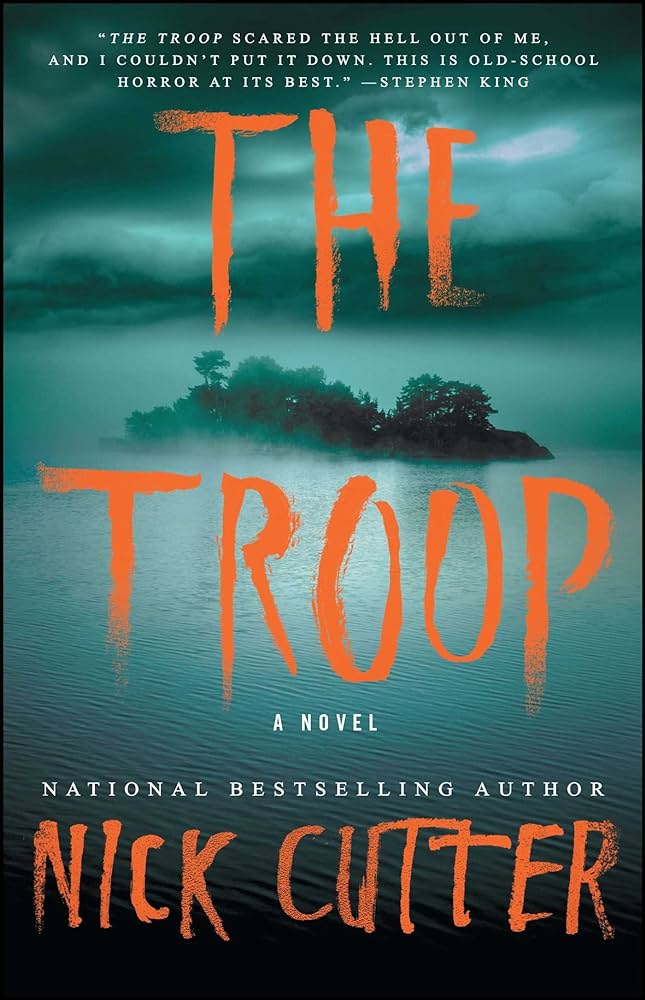
Alright, folks, gather ’round the campfire ’cause I’m about to spin you a yarn that’ll curl your toes and frost your spine. “The Troop” by Nick Cutter, the alter-ego of our Canuck buddy Craig Davidson, dives into the blackest pits of psychological and body horror like it’s a fun day at the beach. Imagine a blend of a Boy Scouts trip with a dash of existential dread, and you’ve pretty much got the setting.
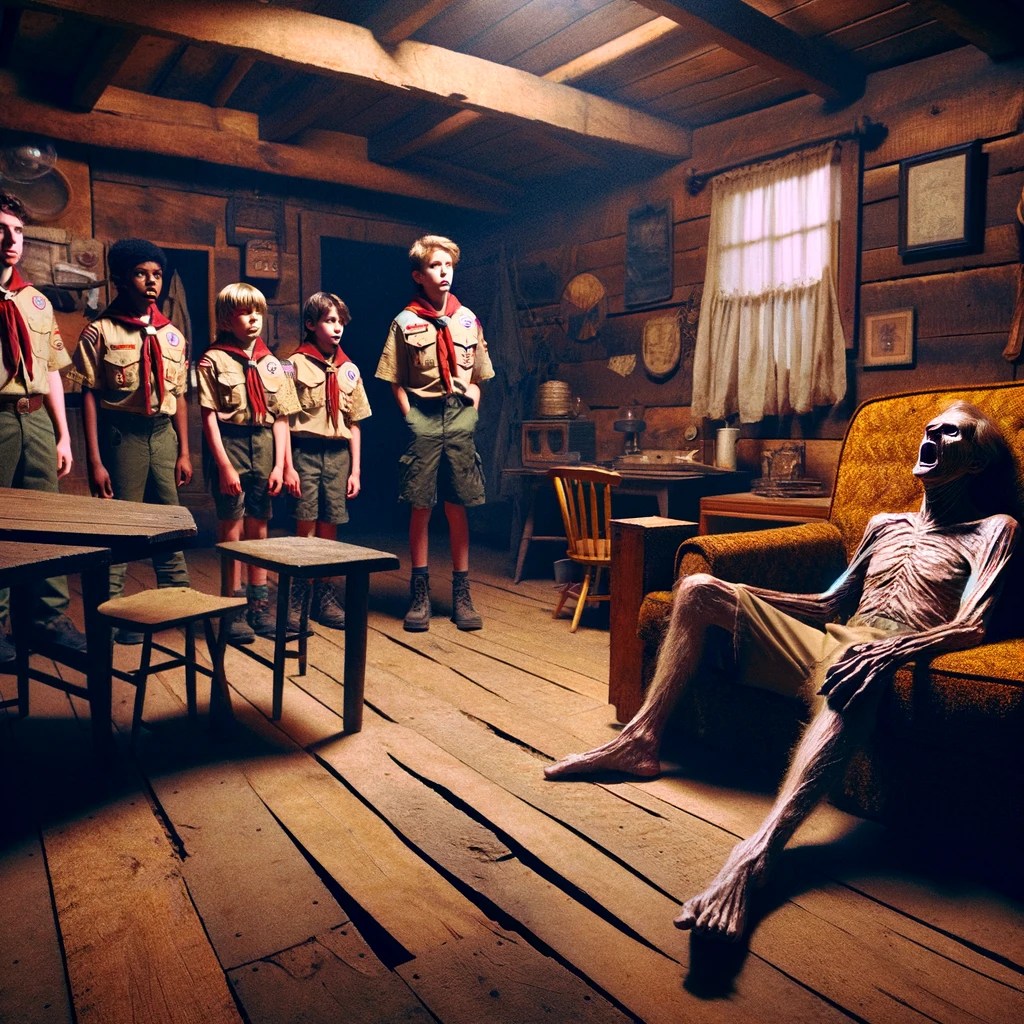
Our dear Scoutmaster Tim Riggs, an unwitting ferryman, guides his flock of five – Kent, Ephraim, Max, Shelley, and Newton – straight into the jaws of horror on the secluded haven of Falstaff Island. It’s supposed to be a typical, boys-will-be-boys adventure until – BAM – in walks Gollum’s Canadian cousin, starving, sick, and setting the stage for an all-you-can-eat horror buffet.
Cutter doesn’t just flirt with horror; he marries it, showcasing a parade of nasty fun that’ll make your skin crawl in the best way possible. Ah, but Cutter is a sly one, turning a gore-fest into a poignant, blood-spattered coming-of-age story. It’s like puberty but with more existential horror and less acne. As the boys face the abyss, they learn that the real monsters are, surprise, the disillusionments of growing up (amongst other… things). Cutter slices deep into the meat of what scares us, poking around in our societal and personal anxieties like they’re a lab experiment gone horrifyingly awry.
His writing dances on the line between a gruesome crime scene and a philosophy lecture, pulling you into the awe of nature while reminding you that nature can be downright horrifying. It’s a story of lost innocence with a side of internal organs – a metaphorical journey, if you will, just with more tangible gore.
The novel does romp through some familiar horror playgrounds, portended by one of the opening quotes. William Golding’s “Lord of the Flies” is its twisted sibling in literary horror, showcasing the chilling degradation of youth stranded from civilization’s comforting lies. Cutter’s island, much like Golding’s, serves as a petri dish for the breakdown of social order and the eerie unveiling of human nature’s dark underbelly. Both authors masterfully dissect the concept of lost innocence, with Cutter adding a layer of visceral horror that echoes the psychological torment found in Golding’s narrative. Leadership, authority, and the descent into savagery are scrutinized under the lens of isolation, revealing that the real horror stems from within. By juxtaposing the two, we unearth a grim reflection on adolescence: a journey not just through external terrors but an introspective voyage into the heart of human darkness, proving that the line between civilized restraint and primal savagery is disturbingly thin, and perilously easy to cross. Nonetheless, “The Troop” cuts a distinctive path with its deep dives into the characters’ psyches and its philosophical musings scattered among the screams.
In wrapping up, “The Troop” is an elegantly disturbing trip down memory lane if your memories involve insatiable, inhuman hunger and questioning your existence. From my perspective, I think this is a near masterpiece in horror. To those who I see complaining that the novel “goes too far” I inquire, “why are your reading horror?!” Ultimately, I agree this book made me feel absolutely terrible in an unrelenting way, but I’m totally here for it. Cutter invites us to ponder whether the true horror is within us all along, or do we just need a healthy dose of albendazole.


Gallery Books
Published February 25, 2014

 The Blog Without a Face
Leave a comment